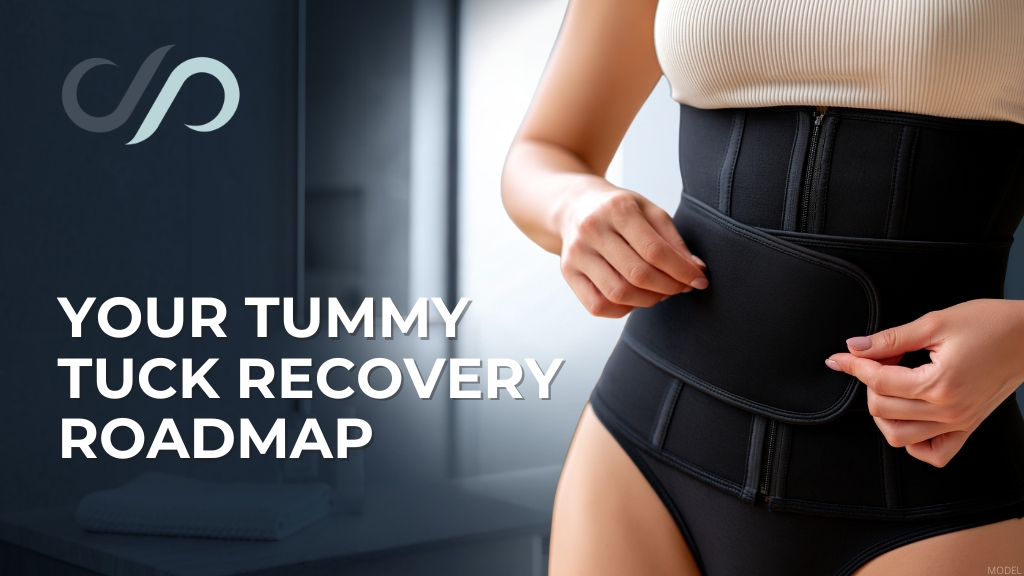
The most important parts of tummy tuck aftercare are protecting your incisions, wearing the compression garment as directed, walking regularly, avoiding strenuous activity, eating well, and following postoperative instructions. Recovery is a gradual process, and what you do during the first several weeks can affect both your comfort and your final result.
At my Marina del Rey practice, I prepare my Los Angeles tummy tuck patients for recovery well before surgery. Knowing what is normal, what activities to avoid, and when to call us can make the experience much less stressful.
Every patient’s recovery is different, so your personalized postoperative instructions should always take priority. But the following guidelines provide a useful overview of what to expect after a tummy tuck.
How Long Is Tummy Tuck Recovery?
Most tummy tuck patients need several weeks to recover, with total recovery generally taking about 4 to 6 weeks before returning to unrestricted activity.
The first few days require the most assistance. You’ll feel sore and swollen, and your abdomen will feel tight. I encourage short, assisted walks beginning early in recovery to promote circulation, but most of your energy should be directed toward rest and healing. You’ll need to walk slightly hunched over to avoid putting tension on your incisions.
During the first week, mobility gradually becomes easier. Many patients can return to desk-based work within approximately 1 to 2 weeks, although your occupation and the extent of your surgery make a significant difference.
Activity increases progressively from there. Strenuous exercise and heavy lifting remain restricted until I’ve determined that your abdominal tissues have healed sufficiently.
For a closer look at individual milestones, read my week-by-week tummy tuck recovery timeline and tips.
What Does Good Tummy Tuck Aftercare Involve?
Good tummy tuck aftercare means following your postoperative instructions consistently rather than trying to accelerate the healing process.
Your specific instructions will address medications, incision care, showering, compression, sleeping position, activity, and follow-up appointments. Follow those directions even when you begin feeling considerably better.
A few priorities are especially important:
Walk regularly. I encourage gentle walking early in recovery. Short trips around your home help promote circulation and reduce the risks associated with prolonged inactivity, such as blood clots. This doesn’t mean taking long walks for exercise during the first few days.
Protect your incisions. Keep your surgical sites clean and dry according to the instructions you receive. Don’t apply creams, ointments, scar products, or other substances unless we’ve approved them.
Take medications as directed. Follow the prescribed schedule and contact us if you have a medication question or unexpected side effect, rather than making changes on your own.
Stay hydrated and eat nutritious foods. Your body needs adequate calories, protein, vitamins, minerals, and fluids to repair tissue. Lean proteins, fruits, vegetables, whole grains, and other nutrient-dense foods can support the healing process.
Most importantly, don’t compare your recovery too closely with someone else’s. Two patients having what sounds like the same operation may progress differently because their anatomy, surgical plan, health, and healing rates aren’t identical.
How Should You Care for Your Tummy Tuck Incision?
Keep your tummy tuck incision clean, protected, and free from unnecessary tension while it heals.
Your incision is typically positioned low on the abdomen so that the resulting scar can be concealed by underwear and many swimsuit styles. Early in recovery, however, the incision may look red or raised. That’s part of the normal scar-maturation process.
Avoid picking at scabs, applying unapproved products, or exposing a healing incision to unnecessary friction. Once the incision has healed sufficiently, I’ll advise you about scar care and when you can begin using appropriate products.
Scar improvement continues for months rather than weeks. Protecting mature scars from sun exposure is also important because ultraviolet exposure can make discoloration more noticeable.
How Long Should You Wear Compression After a Tummy Tuck?
Wear your compression garment for the duration I recommend based on your procedure and healing progress. Compression can support healing tissues and help control swelling during recovery. Your garment should feel supportive without creating excessive pressure, pain, numbness, or skin irritation.
Don’t assume that tighter compression is better. And don’t stop wearing your garment simply because swelling has started to improve. I’ll evaluate your progress at follow-up appointments and offer updated instructions.
WARNING:
This feature contains nudity. Please click OK to confirm you are at least 18 years of age and are not offended by such material.


What Activities Should You Avoid After a Tummy Tuck?
Avoid heavy lifting, strenuous exercise, abdominal workouts, and other activities that place excessive tension on your healing tissues until you’re cleared to resume them. One of the biggest recovery mistakes is doing too much, too soon, because you feel better. Your energy and comfort can improve before deeper tissues have completely healed.
During early recovery, avoid:
- Heavy lifting, including lifting young children
- Running and other high-impact exercise
- Abdominal workouts
- Strenuous housework
- Swimming until your incisions have healed and you’re cleared
- Driving while taking prescription pain medication or until you can safely maneuver the vehicle
- Smoking, vaping, and other nicotine use
- Alcohol when it could interfere with medications or your recovery
- Sleeping or positioning yourself in ways that place unnecessary tension on your abdomen
I’ll gradually clear you for additional activity based on how you’re healing.
What Should You Eat During Tummy Tuck Recovery?
Prioritize protein, nutrient-dense foods, adequate calories, and hydration while your body heals.
This isn’t the time for crash dieting. Protein provides building blocks for tissue repair, while a varied diet helps supply the vitamins and minerals involved in healing. Choose foods you tolerate well and keep convenient options available before surgery. Preparing meals ahead of time can be particularly helpful during the first week.
Hydration is also important. Keep water within easy reach and drink regularly throughout the day unless you’ve received different medical instructions.
What Are Warning Signs After a Tummy Tuck?
Contact your surgical team if you experience symptoms that are unexpected, worsening, or significantly different from the recovery pattern you’ve been told to expect.
Examples that warrant prompt communication include worsening redness, unusual drainage, fever, sudden or pronounced swelling, worsening pain, or changes around the incision that concern you.
Certain symptoms can require urgent medical attention. These include difficulty breathing, chest pain, or other sudden, severe symptoms. Follow the emergency instructions provided by your surgical team rather than waiting for a routine follow-up appointment.
Give Your Body Time To Heal
Successful tummy tuck recovery depends as much on patience as it does on following individual aftercare instructions. My Hourglass Tummy Tuck is designed to do more than simply remove loose abdominal skin. I use a comprehensive approach to tighten the abdominal wall and sculpt the surrounding contours, creating a more defined waist and natural-looking proportions. Protecting those changes during recovery is an important part of achieving your final result.
If you’re looking for a top tummy tuck surgeon in the Los Angeles area, we invite you to request a consultation using the online form or call us at (310) 300-1779 to schedule an appointment.
This blog post was originally published in May 2023 and updated in September 2026.
Leave a Reply