GLP-1 medications have helped millions achieve significant, sustained weight loss — and for many patients, body contouring after weight loss surgery is the natural, empowering final chapter of that journey. Excess skin is not a flaw; it is evidence of real transformation. The goal of surgery is to reveal the body that hard work and discipline have already built, with results that look timeless and entirely your own.
What Does GLP-1 Weight Loss Actually Do to Your Body? (And Why Surgery Is Sometimes the Natural Next Step
GLP-1 receptor agonists — including semaglutide (sold as Ozempic and Wegovy) and tirzepatide (sold as Mounjaro and Zepbound) — suppress appetite and slow gastric emptying, helping many patients achieve significant weight loss. While these medications can create life-changing transformations, they may also leave behind excess skin and changes in body contour that cannot be corrected through weight loss alone.
Dr. David Stoker has extensive experience helping patients complete their transformation after significant weight loss, including his work with Extreme Makeover: Weight Loss Edition. These procedures focus on restoring proportion, contour, and confidence after patients have achieved major changes in their bodies.
Rapid or significant fat loss, however, outpaces the skin’s ability to contract. Collagen and elastin fibers that once gave skin its resilience are permanently stretched, and no amount of exercise, hydration, or topical treatment will restore their original architecture.
Where Excess Skin Typically Develops After Major Weight Loss
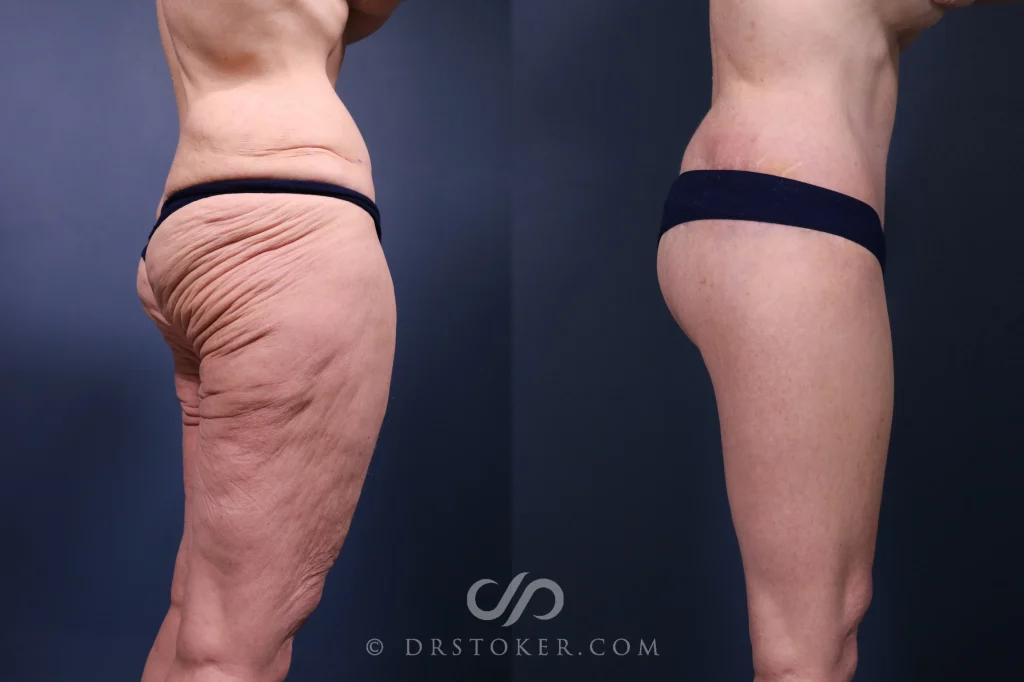
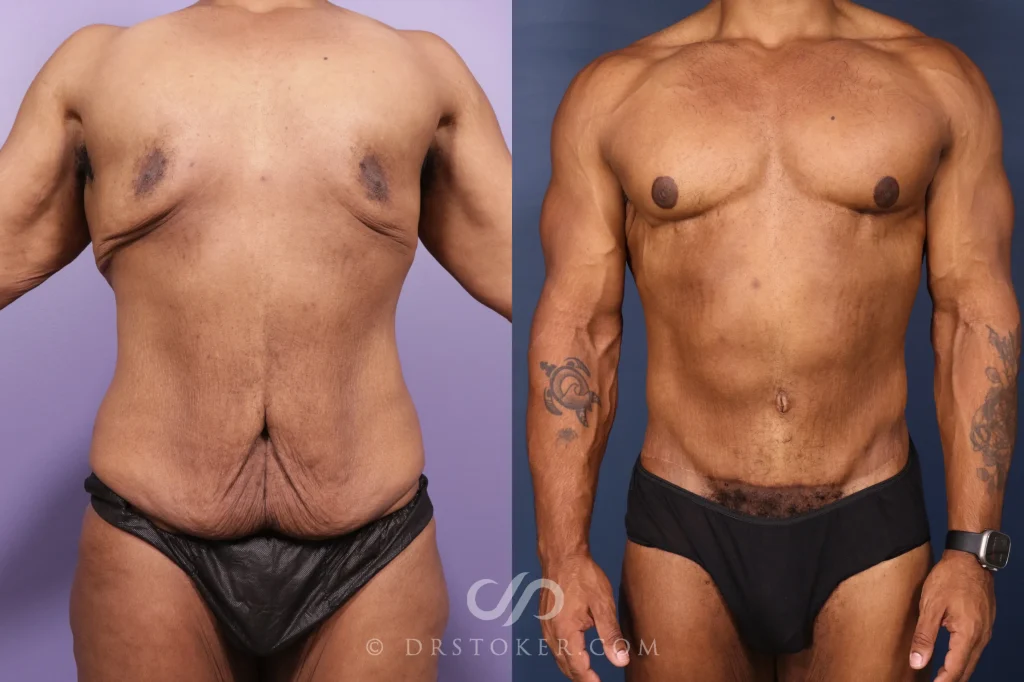
The areas most affected tend to follow a predictable pattern:
- Abdomen — the most common site of redundant skin, often with weakened underlying muscle
- Arms — loose, hanging tissue along the inner upper arm (“bat wings”)
- Breasts — deflation and ptosis (drooping) as volume redistributes
- Inner thighs — skin laxity that causes chafing and limits comfort
- Back and flanks — rolls that persist even at a healthy weight
Why Skin Laxity Is a Structural Problem, Not a Lifestyle One
This distinction matters — both medically and emotionally. Residual skin after major weight loss is a tissue-integrity issue, not a reflection of effort or commitment.
Excess skin can cause:
- Chronic rashes, moisture-related infections, and skin breakdown in skin folds
- Difficulty fitting clothing and undergarments comfortably
- Persistent self-consciousness that prevents patients from fully inhabiting their new body
- Limited mobility or discomfort during exercise
For patients who have reached a stable goal weight, surgical correction addresses what medication — and willpower — simply cannot.
Which Procedures Address Excess Skin After Weight Loss? (Tummy Tuck, Body Lift, Arm Lift, and Breast Lift Explained)
A picture is worth a thousand words, particularly in plastic surgery. Stoker Plastic Surgery has documented more than 12,000 before-and-after photographs, giving prospective patients an unusually transparent look at real surgical outcomes across many different body types, ages, and procedures. We encourage patients to explore the gallery and look for individuals whose anatomy and goals resemble their own.
The right procedure depends on where excess skin exists, how much laxity is present, and what a patient’s priorities are. Dr. Stoker evaluates each patient as an individual — no two post-weight-loss bodies are identical, and no standardized operative plan produces consistently natural-looking results.
Tummy Tuck After Major Weight Loss (Abdominoplasty)
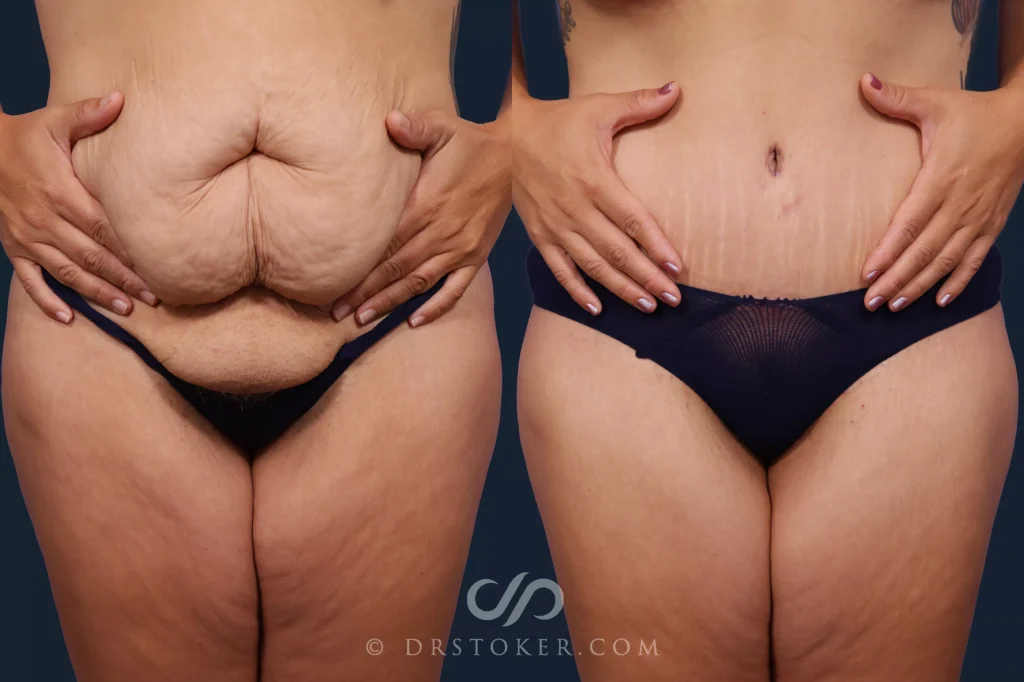
A tummy tuck is the most commonly requested procedure among patients who’ve lost significant weight through GLP-1 therapy. It removes excess abdominal skin, repairs separated or weakened abdominal muscles (diastasis recti — a frequent finding after significant weight fluctuation), and repositions the navel for a sculpted, proportionate contour.
Dr. Stoker’s “Hourglass” Tummy Tuck goes further than standard abdominoplasty. It incorporates strategic liposuction of the waist and flanks to create a defined, feminine silhouette — the kind of shape that reflects the patient’s actual transformation rather than simply flattening the abdomen. Some patients researching this stage of their journey use the terms “360 tummy tuck” or “circumferential tummy tuck” to describe something more extensive — a procedure that continues around the flanks, back, and buttocks rather than treating only the front of the abdomen. For patients whose excess skin extends that far, a standard tummy tuck alone won’t fully resolve it. That’s precisely the territory Dr. Stoker’s Bikini Body Lift™ was developed for, covered next.
The Bikini Body Lift™ After Significant Weight Loss
For patients with significant changes in their abdomen, waist, buttocks, and thighs after weight loss, Dr. Stoker’s Bikini Body Lift™ provides a comprehensive approach to restoring body proportions.
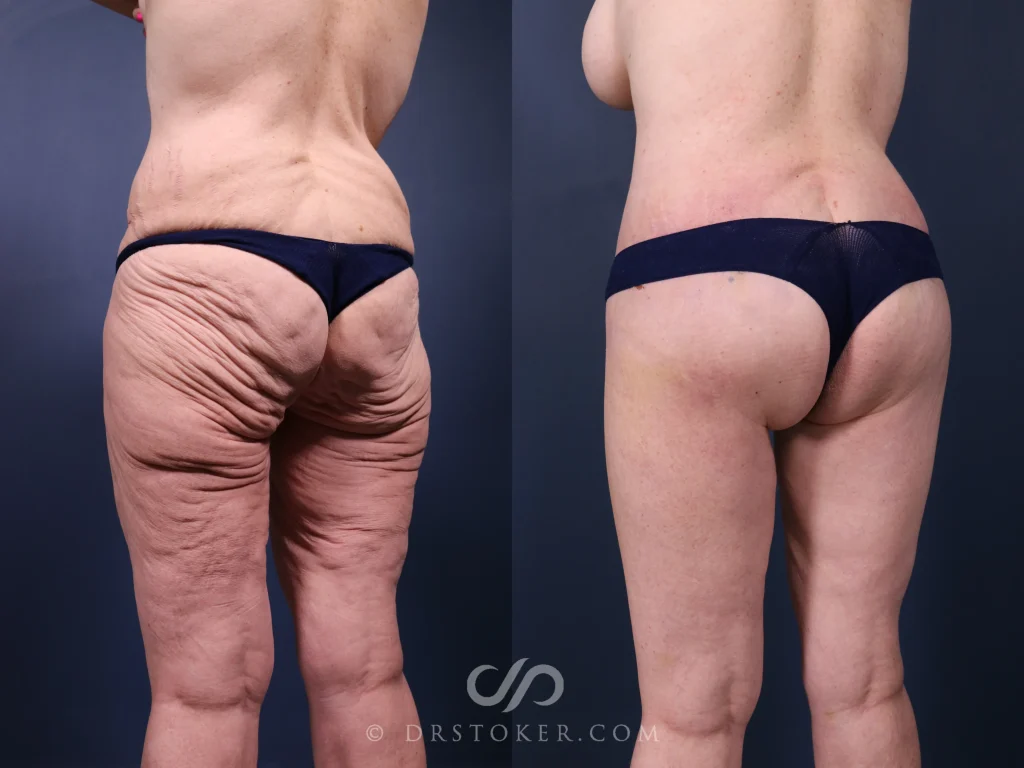
Unlike procedures focused only on removing excess skin, the Bikini Body Lift™ combines advanced contouring techniques designed around the patient’s individual anatomy. What makes Dr. Stoker’s Bikini Body Lift™ especially distinctive is the work performed beneath the skin. Rather than simply removing excess tissue and tightening the surface, he carefully redistributes and supports the underlying tissues while managing tension differently around each zone of the body. The waist, thighs, buttocks, and lower back each require a different approach to create smooth transitions, maintain natural curves, and reduce unnecessary tension on the incisions. This customized internal reshaping is a critical part of how Dr. Stoker creates a balanced, circumferential result rather than simply removing loose skin.
How Hormonal Changes and Menopause Can Affect Body Shape
Weight loss is not the only reason women experience major changes in their body shape. Hormonal changes associated with aging, perimenopause, and menopause can influence where the body stores fat and how the skin and underlying tissues respond over time. Women may notice increasing fullness around the waist, changes in the thighs, loss of buttock shape, or skin laxity even when their overall weight remains relatively stable.
For the right patient, body contouring can address these changes by restoring proportion between the waist, thighs, and buttocks rather than focusing on a single isolated area. Dr. Stoker evaluates each patient individually to determine which combination of procedures will best restore a natural, balanced silhouette.
Can the Bikini Body Lift™ Improve Cellulite?
Cellulite is one of the most difficult contour concerns to improve because it involves the relationship between the skin, connective tissue, and underlying fat. Creams, exercise, and many non-surgical treatments may offer only limited improvement because they do not fundamentally reposition the tissues responsible for the uneven surface.
The Bikini Body Lift™ gives Dr. Stoker the ability to address these tissues much more comprehensively. By lifting, redistributing, and placing tension strategically across the buttocks and thighs, the procedure can dramatically diminish the appearance of cellulite in appropriately selected patients. Dr. Stoker considers this one of the most exciting and underappreciated benefits of the operation because the improvement comes from reshaping the underlying anatomy rather than simply treating the surface of the skin.
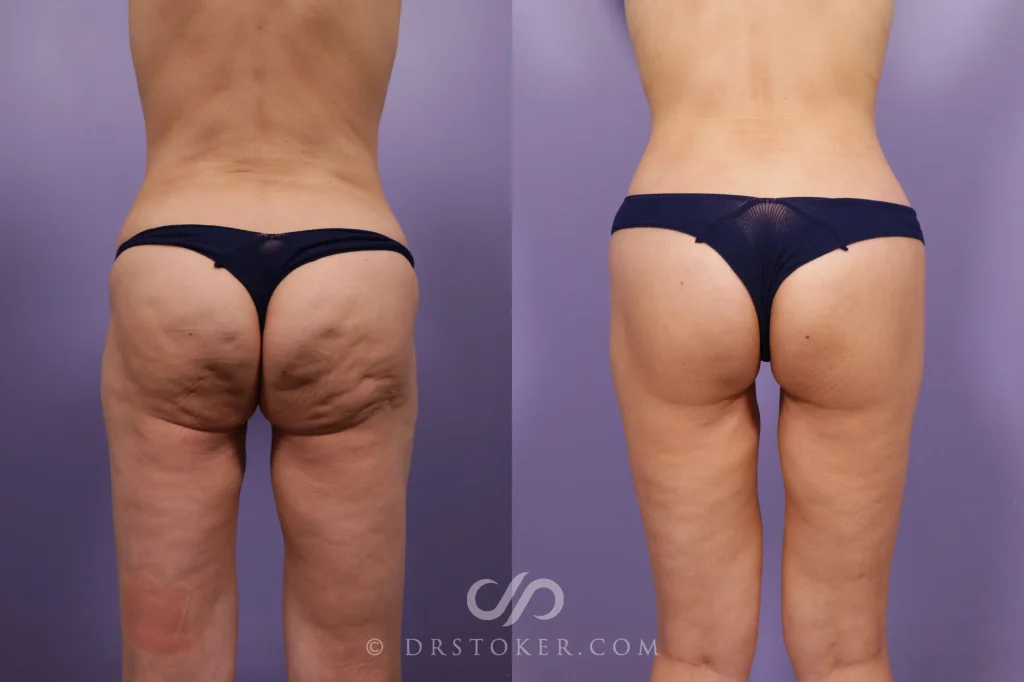
Cellulite Improvement from the Bikini Body Lift™ performed by Dr. David Stoker.
Learn more about Dr. Stoker’s Bikini Body Lift™ and view additional patient transformations in our dedicated Bikini Body Lift™ gallery and procedure resource.
Arm Lift After Weight Loss (Brachioplasty)
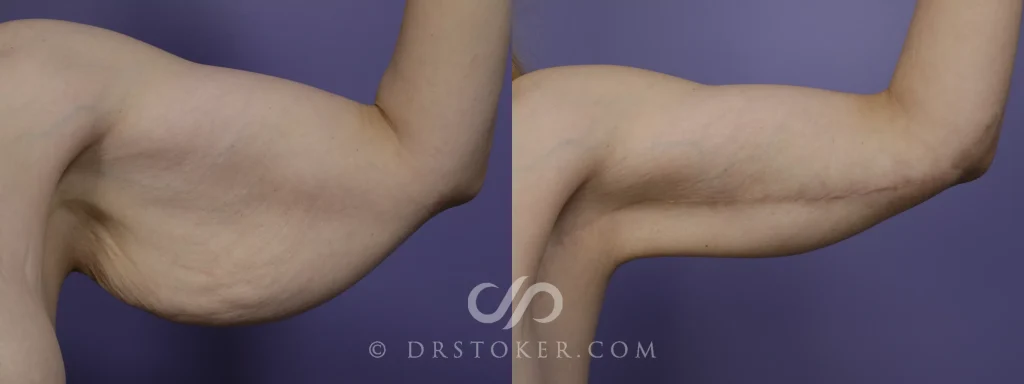
Loose inner-arm skin is among the most visible and functionally disruptive effects of rapid weight loss. An arm lift removes this redundant tissue through a discreetly placed incision along the inner arm, restoring a toned, defined contour from shoulder to elbow.
Scar placement and technique matter enormously here. Dr. Stoker’s approach is designed to keep incisions as inconspicuous as possible — a reflection of the same philosophy that guides every procedure he performs: results that look refined, not operated upon.
Breast Lift After Weight Loss
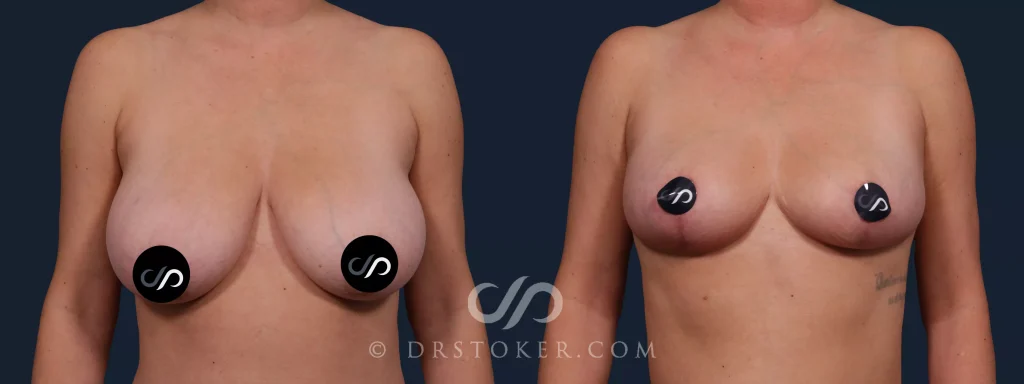
Significant weight loss nearly always affects breast volume and position. A breast lift (mastopexy) reshapes and elevates breast tissue, removes excess skin, and repositions the nipple-areolar complex to a natural, youthful height.
Depending on the degree of volume loss, a breast lift may be combined with implants to restore both position and fullness. Dr. Stoker customizes this decision entirely to the individual — the goal is always balance and proportion within the patient’s frame, never a generic outcome.
When Multiple Procedures Are Combined
This stage of transformation frequently involves staging or combining procedures. Common pairings include:
- Tummy Tuck + Arm Lift — addressed in the same operative session for appropriate candidates
- Body Lift + Breast Lift — often staged for safety and optimal recovery
- Tummy Tuck + Breast Lift — a “mommy makeover”-style combination when both areas are a priority
Dr. Stoker and his team map out a sequenced surgical plan that prioritizes both safety and the most complete transformation achievable.
When Are You Ready for This Stage of Your Journey?
The ideal timing for body contouring is different for every patient. Dr. Stoker evaluates each individual based on anatomy, goals, overall health, skin quality, and long-term success rather than strict numerical criteria.
During a consultation, Dr. Stoker develops a personalized surgical plan designed around each patient’s unique transformation and desired outcome.
Strong candidates for post-weight-loss body contouring typically share the following qualities:
- Overall health that supports safe surgery and healing.
- Realistic expectations and an understanding that results vary by individual.
- A desire to complete their transformation through a customized surgical plan based on their anatomy and goals.
A Note on Nutritional Readiness
Patients who have undergone bariatric procedures are especially prone to protein and micronutrient deficiencies that can compromise healing. Dr. Stoker’s team evaluates lab work as part of the pre-surgical process — an extra layer of diligence that reflects the practice’s commitment to both safety and outcome.
What Is Recovery Like After Post-Weight-Loss Body Contouring?
Recovery Varies by Procedure — Here Is What to Expect
Recovery varies considerably depending on the procedure or combination of procedures performed. Dr. Stoker gives every patient an individualized recovery plan based on the extent of surgery, overall health, healing progress, and lifestyle.
For larger body contouring procedures, Dr. Stoker generally advises patients to avoid exercise for approximately two months. Activity is then gradually reintroduced, with patients typically easing back toward their full exercise routine through approximately the three-month mark. Lighter daily activities and return-to-work timing vary by patient and procedure.
Rather than relying on a single recovery timeline for everyone, Dr. Stoker and his team follow each patient closely and adjust activity recommendations as healing progresses.
Comfort, Support, and the Rapid Recovery Philosophy
Dr. Stoker’s practice is built around minimizing downtime without compromising results. Detailed pre-operative preparation, precise surgical technique, and attentive post-operative care all contribute to a smoother, more comfortable recovery experience.
Patients are never left to navigate recovery alone — the team remains accessible and engaged throughout the healing process.
Why Patients Choose Dr. Stoker
For patients who have invested deeply in their health transformation, the choice of surgeon is not a small decision. A few reasons the practice has become a destination for body contouring after weight loss:
- Unmatched credentials:
- First in his class at UCSF School of Medicine; highest national score on the plastic surgery residency exam; named a top surgeon by Newsweek, Castle Connolly, and The New York Times.
- A library of outcomes:
- Thousands of before-and-after photos and hundreds of educational videos offer transparency that few practices can match.
- Consistent patient trust:
- A strong average rating drawn from patients who traveled from nearly 60 countries to be in Dr. Stoker’s care.
- One destination for the complete transformation:
- From tummy tuck after GLP-1 weight loss to arm lift, breast lift, and beyond, Dr. Stoker performs every stage of post-weight-loss body contouring under one roof — so your care, your aesthetic, and your outcome remain seamlessly consistent.
The next step is simply a conversation. Dr. Stoker and his team take the time to understand where you are in your journey, what bothers you most, and what “finished” truly looks like for you — then map a surgical plan that honors every pound you’ve worked to lose.
Frequently Asked Questions
How long after weight loss surgery or GLP-1 medication should I wait before body contouring?
The ideal timing for body contouring after weight loss is different for every patient. Dr. Stoker evaluates each patient individually based on anatomy, goals, overall health, and long-term success rather than strict numerical criteria. During your consultation, he will assess your unique circumstances and recommend the surgical approach that best supports your transformation.
Can a tummy tuck after significant weight loss address both loose skin and weakened abdominal muscles?
Yes — the “Hourglass” Tummy Tuck removes redundant skin while simultaneously repairing the underlying muscle wall, restoring both contour and core structure that diet and medication alone cannot rebuild. Can a tummy tuck after significant weight loss address both loose skin and weakened abdominal muscles?
What’s the difference between a tummy tuck, a “360 tummy tuck,” and the Bikini Body Lift™?
A standard tummy tuck (abdominoplasty) addresses the front of the abdomen. “360 tummy tuck” and “circumferential tummy tuck” are terms patients use for a more extensive version that continues around the flanks and back. Dr. Stoker’s Bikini Body Lift™ takes that concept further still — treating the abdomen, hips, flanks, outer thighs, and buttocks as one connected surgical plan, with the incision engineered to stay hidden beneath a bikini bottom rather than sitting at the natural waistline.
Is it possible to combine procedures, such as a body lift and breast lift, in a single surgery?
Combining procedures is often appropriate and can reduce overall recovery time, though candidacy depends on factors like your health, the extent of correction needed, and surgical time. Dr. Stoker will advise whether a staged or combined approach best serves your safety and goals.
What makes body contouring after weight loss different from standard cosmetic surgery?
Post-weight-loss skin has often lost significant elasticity and exists in larger, more complex panels than skin addressed in standard cosmetic procedures — requiring advanced techniques, precise tension management, and an artist’s eye for proportion to achieve natural-looking, lasting results.
Does Stoker Plastic Surgery treat patients who used semaglutide or other GLP-1 medications specifically?
Absolutely. Patients who’ve reached a stable weight through GLP-1 therapy represent a growing, meaningful part of Dr. Stoker’s practice — and his team is experienced in the unique tissue characteristics and nutritional considerations that come with this path.
You’ve done the hard work. This next stage is the final, empowering chapter — and it deserves the same precision and artistry that defined every step before it. We invite you to schedule a private consultation at Stoker Plastic Surgery in Marina del Rey and discover what your transformation looks like, completed.
Each patient is unique and individual results may vary.
Leave a Reply