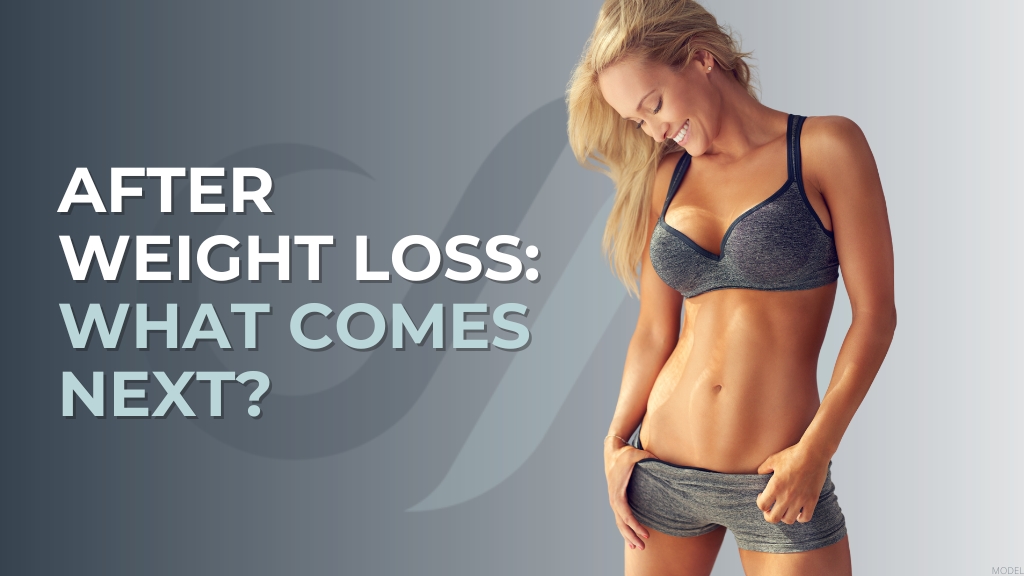
Some of the most satisfying operations I perform involve patients who have already accomplished something significant: losing a substantial amount of weight. Today, my patients reach that point in many different ways, including lifestyle changes, bariatric surgery, and GLP-1 medications.
Their dedication to making a personal transformation often includes consulting with some of the best plastic surgeons in Los Angeles, and I’m honored when they choose me for this final step.
But losing fat and tightening skin are two very different processes. After significant weight loss, stretched skin doesn’t always contract enough to conform to your smaller body. Folds of loose skin may remain around the abdomen, waist, buttocks, thighs, arms, breasts, and other areas.
At my Marina del Rey practice, I approach post-weight-loss plastic surgery as the next stage of that transformation. Here are 5 things I want patients to understand when considering body contouring after weight loss.
1. When Can You Have Body Contouring Surgery After Weight Loss?
You should generally wait until you’ve reached a healthy, sustainable weight and maintained it for at least 3 to 6 months before having body contouring surgery.
Weight stability is more important than how you lost the weight. I want your body to be at a relatively stable weight before creating your surgical plan. That’s because if you continue losing a significant amount of weight after surgery, you may develop additional loose skin that compromises the contours we’ve created. Major weight regain can stretch those tissues again.
The waiting period also gives me a clearer picture of your final skin laxity, fat distribution, and proportions.
There isn’t a specific weight that every patient must reach. I look at your overall health, nutritional status, weight trajectory, anatomy, and whether you’re at a weight you can realistically maintain.
If you’re approaching your goal but aren’t sure whether you’re ready, my guide to when you can have surgery after weight loss explains the timing considerations in more detail.
2. What Body Contouring Procedures Can You Have After Weight Loss?
Post-weight-loss body contouring can address loose skin virtually anywhere on the body, and the right procedures depend on where your skin and tissues have changed.
The abdomen is a common starting point. If excess skin is primarily concentrated across the front of the abdomen, a tummy tuck removes skin, tightens the abdominal wall, and improves the contours of your waistline.

Major weight loss, however, often affects much more than just the abdomen. Depending on your anatomy, I may recommend a:
- Body lift for more extensive laxity involving the abdomen, waist, buttocks, and thighs
- Thigh lift to remove hanging skin from the thighs
- Arm lift to tighten loose upper-arm skin
- Pubic lift to correct sagging of the mons pubis
- Breast lift, augmentation, or both to restore breast shape and volume
- Panniculectomy in appropriate cases to remove a significant overhanging apron of abdominal skin
- Liposuction when residual fat needs to be sculpted along with skin removal
For patients with extensive lower-body laxity, I may recommend my Bikini Body Lift™. I developed this 360-degree approach to comprehensively contour the abdomen, waist, buttocks, outer thighs, and pubic region while positioning the incision low enough to remain concealed beneath bikini bottoms and underwear.
The important point is that your operation should align with your weight-loss pattern. I don’t automatically recommend the same combination of procedures to everyone who has lost 50, 100, or 150 pounds.
WARNING:
This feature contains nudity. Please click OK to confirm you are at least 18 years of age and are not offended by such material.


3. Who Is a Good Candidate for Plastic Surgery After Weight Loss?
The best candidates for post-weight loss body contouring are healthy, at a stable and sustainable weight, don’t use nicotine products, and are prepared for the recovery involved.
Reaching your goal weight is important, but it’s only one part of candidacy.
Your overall health matters because these can be substantial operations. I’ll review your medical history, medications and supplements, previous procedures, nutritional status, and any health conditions that could affect anesthesia, wound healing, or recovery.
Lifestyle matters as well. Nicotine interferes with circulation and healing and can substantially increase surgical risks. Maintaining healthy nutrition is particularly important after major weight loss because your body needs adequate protein and other nutrients to heal.
I also look at whether you can realistically maintain your weight. Normal weight fluctuations happen, but you should feel confident that you’ve transitioned from active weight loss to long-term weight maintenance.
Finally, you need realistic expectations about scars. Removing substantial amounts of loose skin requires incisions. I place tremendous emphasis on thoughtful incision placement, precise closure, and creating smooth, natural-looking contours, but body contouring always involves a trade-off between excess skin and surgical scars.
4. What Are the Risks of Body Contouring After Weight Loss?
Body contouring after major weight loss can be performed safely for appropriate candidates, but these operations carry risks such as bleeding, fluid accumulation, delayed wound healing, infection, and blood clots.
Some post-weight-loss procedures involve long incisions and extensive tissue repositioning, making careful surgical planning especially important.
Seromas, or pockets of fluid beneath the skin, can occur following body contouring. Incisions can also heal more slowly in some areas than others, particularly when extensive tissue has been removed.
Risk also influences whether I recommend combining procedures or staging them. Although completing several procedures during a single operation can mean one anesthesia and one recovery period, there is a point at which doing more isn’t necessarily better or safer.
When extensive correction is required, I may divide treatment into 2 or more stages. The goal is to accomplish your transformation safely while maintaining the highest standards for your results.
5. How Do You Choose a Plastic Surgeon After Major Weight Loss?
Choose a board-certified plastic surgeon with substantial experience performing complex body contouring procedures on patients who have lost significant amounts of weight.
Post-weight-loss surgery is a specialized area of plastic surgery. Removing skin is only part of the challenge. The surgeon also needs to understand how to reposition tissues, preserve or restore attractive proportions, plan scars, manage multiple body regions, and determine which procedures can safely be combined.
Look carefully at a surgeon’s before-and-after photographs. Don’t evaluate only the most dramatic transformations. Look for patients whose starting anatomy resembles yours and assess details such as waist shape, buttock contour, thigh transitions, scar placement, and overall proportionality.
You should also feel comfortable with the surgeon’s approach to staging. If you need several procedures, ask which should be performed first, which can safely be combined, and why.
Post-weight-loss body contouring has been an important part of my Los Angeles practice throughout my career. I’ve performed these procedures extensively and served as an expert plastic surgeon on The Biggest Loser and Extreme Makeover: Weight Loss Edition. That experience has reinforced my belief that these patients benefit most from comprehensive planning rather than treating each area of loose skin independently.
At my Marina del Rey practice, I evaluate the entire body and develop a sequence of procedures designed to create balanced, natural-looking proportions.
Completing Your Weight-Loss Transformation
Losing a substantial amount of weight is an accomplishment regardless of whether you did it through lifestyle changes, bariatric surgery, GLP-1 medications, or a combination of approaches. You shouldn’t feel pressured to pursue plastic surgery afterward. But if loose skin interferes with your comfort, clothing, exercise, or ability to appreciate your new proportions, surgery can address concerns that diet and exercise cannot.
If you’re considering body contouring surgery after weight loss, use the online form to request a consultation or call our office at (310) 300-1779 to schedule an appointment.
This blog post was originally published in November 2018 and updated in September 2026.
Leave a Reply