
How to Avoid an Overdone Facelift — and What Actually Creates Natural Results
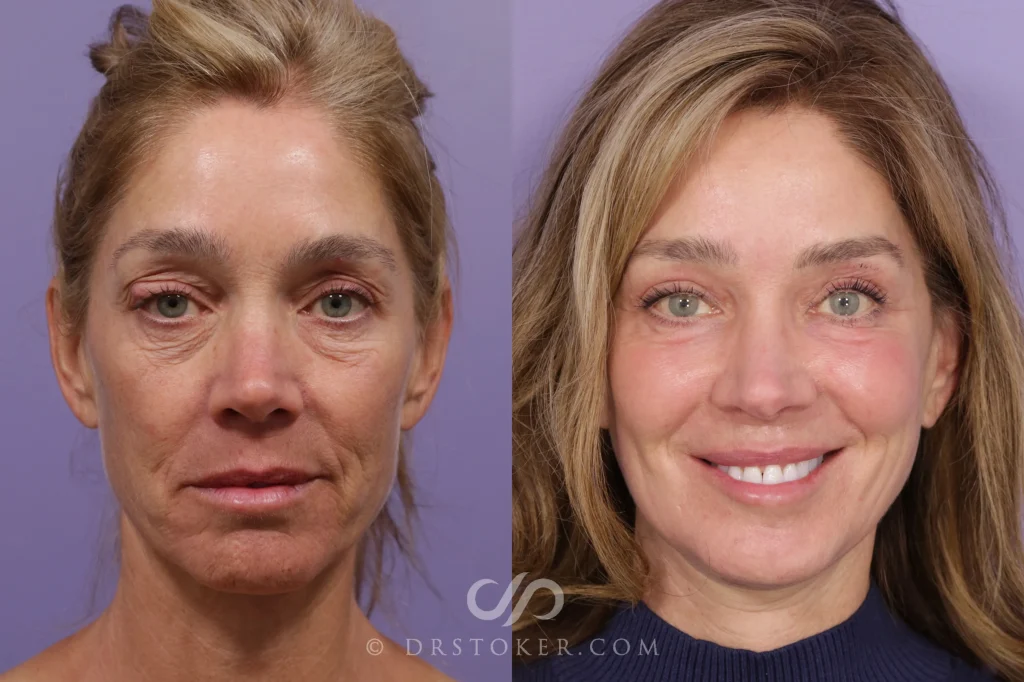
One important consideration when seeking a natural-looking facelift is choosing a surgeon whose technique focuses on repositioning the deeper structural layers of the face rather than relying primarily on skin tension. When the deeper structural layers of the face are repositioned and the skin is allowed to re-drape naturally, the goal is a refreshed look rather than a visibly tightened one. That is the foundational principle behind Dr. Stoker’s Traceless Deep Plane Facelift.
The fear is real. Patients search for “how to avoid overdone facelift” because they have seen the results they do not want: faces that look pulled, windswept, or startled. Understanding exactly what causes that look — at the anatomical level — is the first step toward choosing something better.
What Causes the ‘Windswept’ or Overdone Facelift Look?
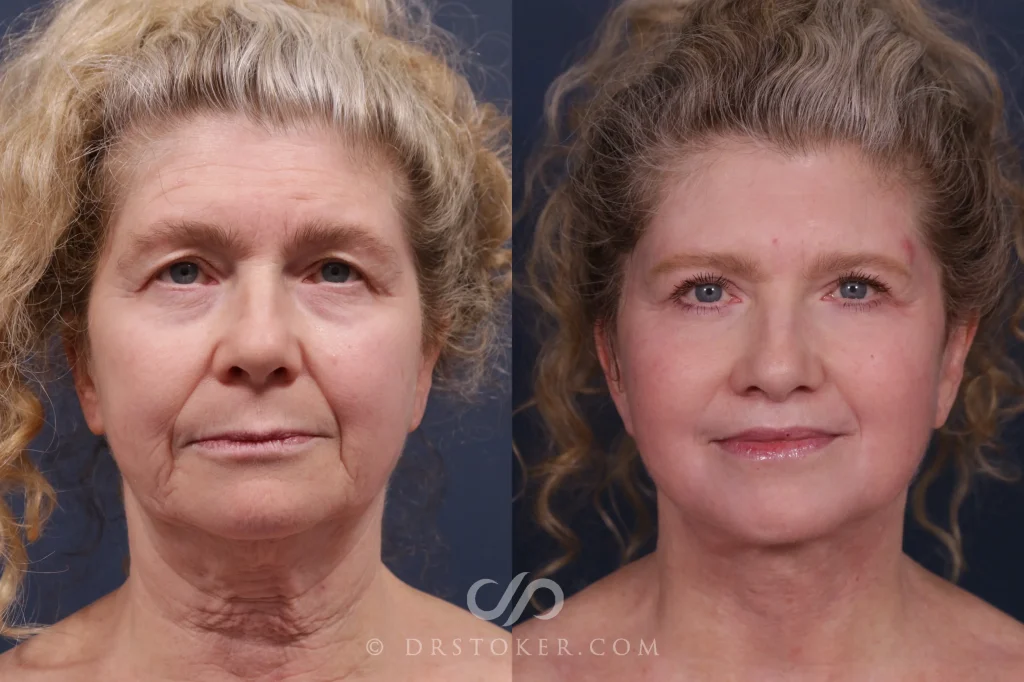
A windswept or overdone appearance can occur when excessive tension is placed on the skin or when facial tissues are repositioned in a way that does not preserve natural facial proportions.
The Skin-Tension Problem
Traditional facelift techniques may rely more heavily on skin removal and tension, depending on the surgical approach and the patient’s anatomy. The result feels logical on paper. In practice, it creates a cascade of unnatural signals:
- Lateral pull — features shift toward the ears, distorting natural facial proportions
- Flattened contours — the soft, three-dimensional quality of a youthful face disappears
- Incision tension — excessive tension can place additional stress on healing incisions and may affect scar quality.
- Less durable structural correction — results depend on how the deeper tissues are addressed, as well as the patient’s anatomy and natural aging process.
Skin is not a support structure. It was never meant to carry the weight of rejuvenation.
Why the Face Ages the Way It Does
Facial aging happens deep — not at the surface. With age, changes occur throughout the deeper tissues of the face, including the SMAS (the superficial musculoaponeurotic system), retaining ligaments, fat compartments, and skin. Fat compartments deflate and shift downward. Skin follows all of it.
A technique focused primarily on the skin may not address the deeper structural changes that contribute to facial aging.
When a facelift relies heavily on skin tension rather than appropriately addressing the deeper tissues, the result may appear tighter or more pulled than intended. The only visible change is tightness. And tightness, on a face, reads as operated.
Deep Plane vs. Skin-Tension Techniques: What Is the Structural Difference?
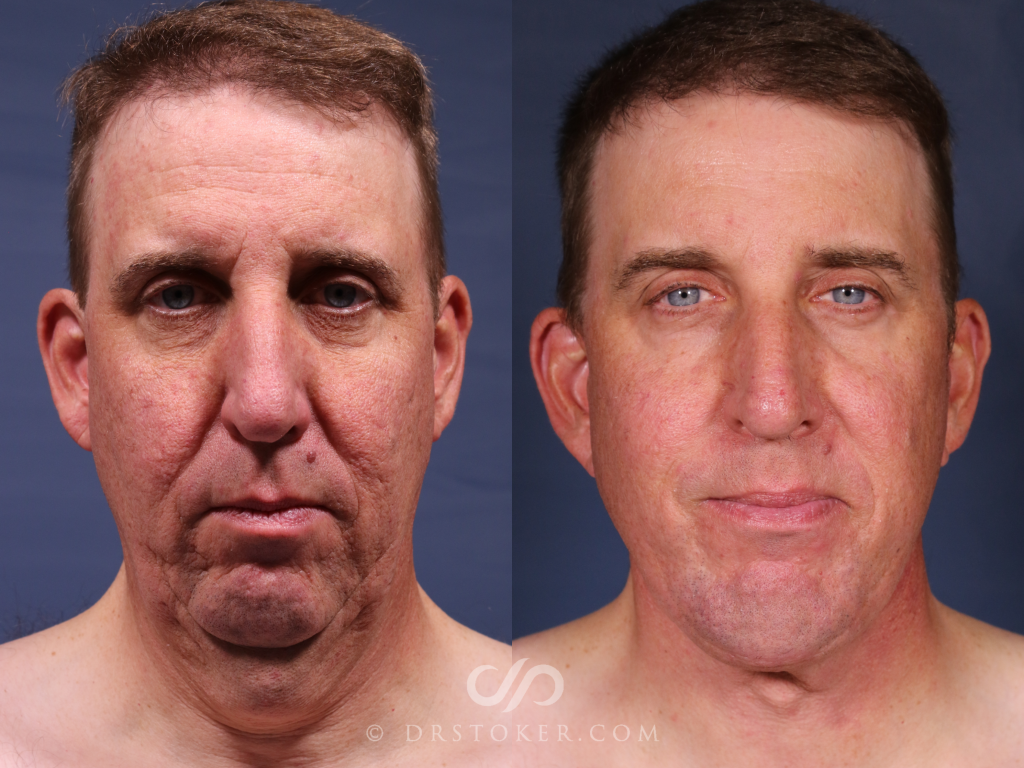
The core difference is where the surgeon operates. One key distinction is the level at which the surgeon works. Depending on the technique, traditional approaches may work more superficially, while a deep plane facelift works beneath the SMAS to release and reposition deeper facial tissues.
What “Deep Plane” Actually Means
In a deep plane facelift, the surgeon releases the retaining ligaments directly. This allows the entire SMAS-skin complex to move as one unified layer — upward and inward, back toward its original youthful position.
Because the deep tissues do the lifting, the skin travels with them — rather than being stretched independently. The result is a face that looks refreshed, not reassembled.
Key Structural Distinctions at a Glance:
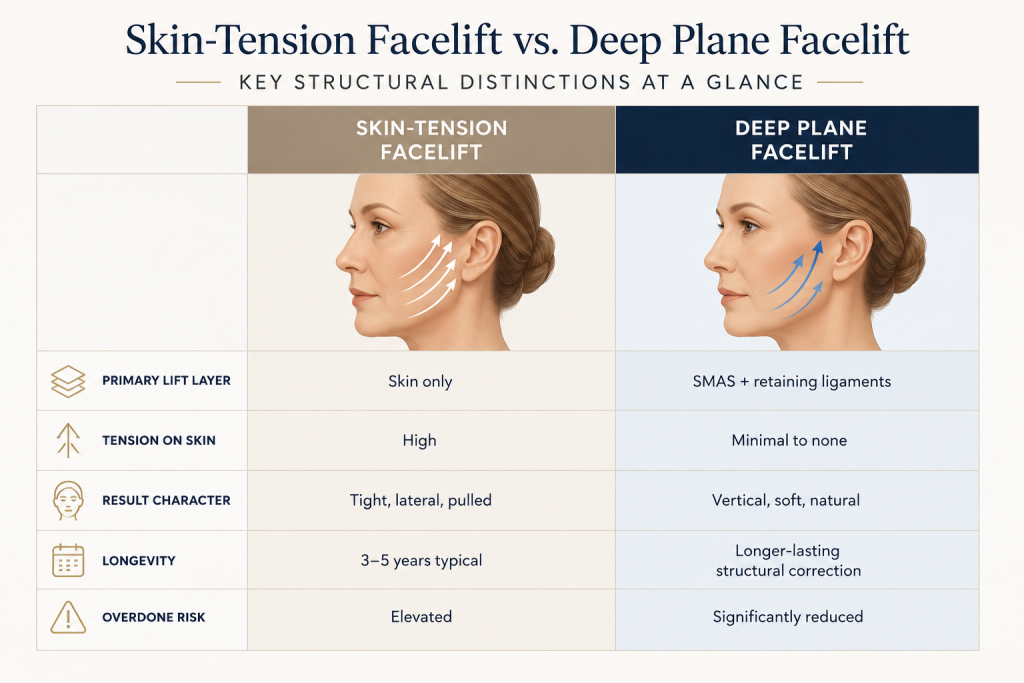
Skin-Tension Facelift
Primary lift layer: Skin only
Tension on skin: High
Result character: Tight, lateral, pulled
Longevity: 3–5 years typical
Overdone risk: Elevated
Deep Plane Facelift
Primary lift layer: SMAS + retaining ligaments
Tension on skin: Minimal to none
Result character: Vertical, soft, natural
Longevity: Longer-lasting structural correction
Overdone risk: Significantly reduced
Why the Distinction Matters for Natural-Looking Results
When less tension is placed on the skin, it can re-drape more naturally over the repositioned underlying tissues. Thoughtful tension management can support favorable incision healing and scar quality. Features stay where they belong — centered, proportionate, unaltered in character.
Dr. Stoker trained under the architects of the modern deep plane facelift at NYU’s Institute of Reconstructive Plastic Surgery. His mentors — Drs. Sherrell Aston and Daniel Baker — are among the surgeons who helped define this approach. Building on that foundation, Dr. Stoker has spent decades refining and optimizing the technique to enhance precision, natural-looking results and recovery, culminating in the Traceless Deep Plane Facelift he performs today.
The deep plane is not simply a more advanced tool. In the right hands, it is a fundamentally different philosophy: restore structure, and the surface takes care of itself.
What Does Recovery and a Natural Result Actually Look Like?
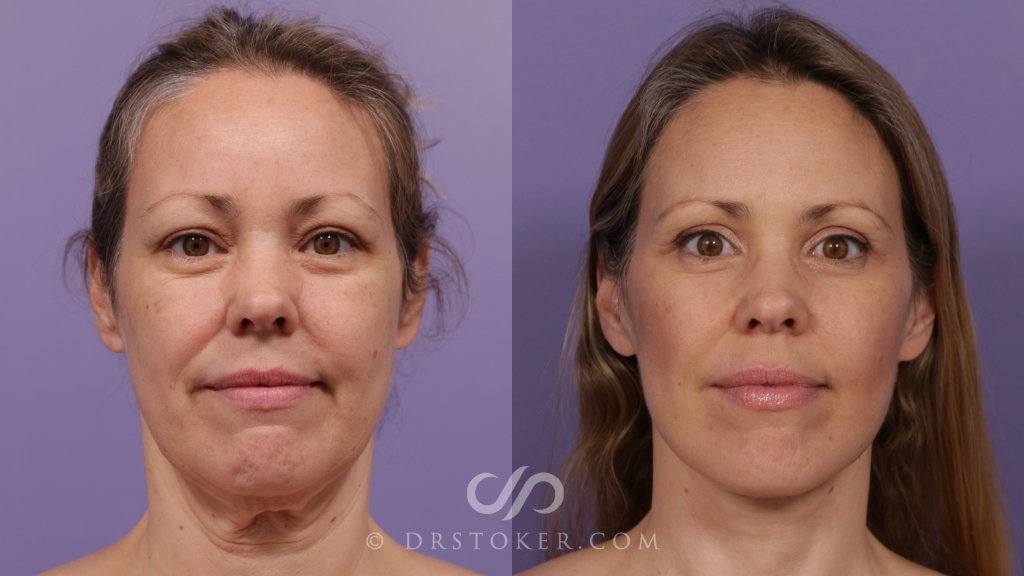
Recovery varies from patient to patient. Dr. Stoker provides individualized guidance based on the extent of surgery, the patient’s healing progress, and their individual circumstances. As swelling gradually subsides, patients can progressively return to normal activities according to their surgeon’s instructions.
Swelling resolves gradually. The final result continues to refine for several months as deeper tissues settle.
What patients notice first is what isn’t there:
- No visible tension lines at the temples or ears
- No distorted hairline
- No tightened, masklike expression
- No visibly distorted or overly tight appearance around the hairline or ears
What remains is a face that looks rested, defined, and recognizably theirs — only younger. Dr. Stoker’s patients regularly describe the result as looking like a better version of themselves from ten years prior, not like someone who has had surgery.
By repositioning deeper facial tissues rather than relying primarily on skin tension, the Traceless Deep Plane Facelift is designed to preserve natural facial proportions and create a balanced, refreshed appearance. The midface lifts. The jawline firms. The neck clears. Everything moves as one cohesive unit.
When Results Are Fully Visible
Patience matters. Results continue to evolve as swelling subsides and the deeper tissues settle. The timing of visible and final results varies from patient to patient, and Dr. Stoker provides individualized guidance throughout the recovery process.
How Do I Choose the Right Surgeon to Avoid an Overdone Result?
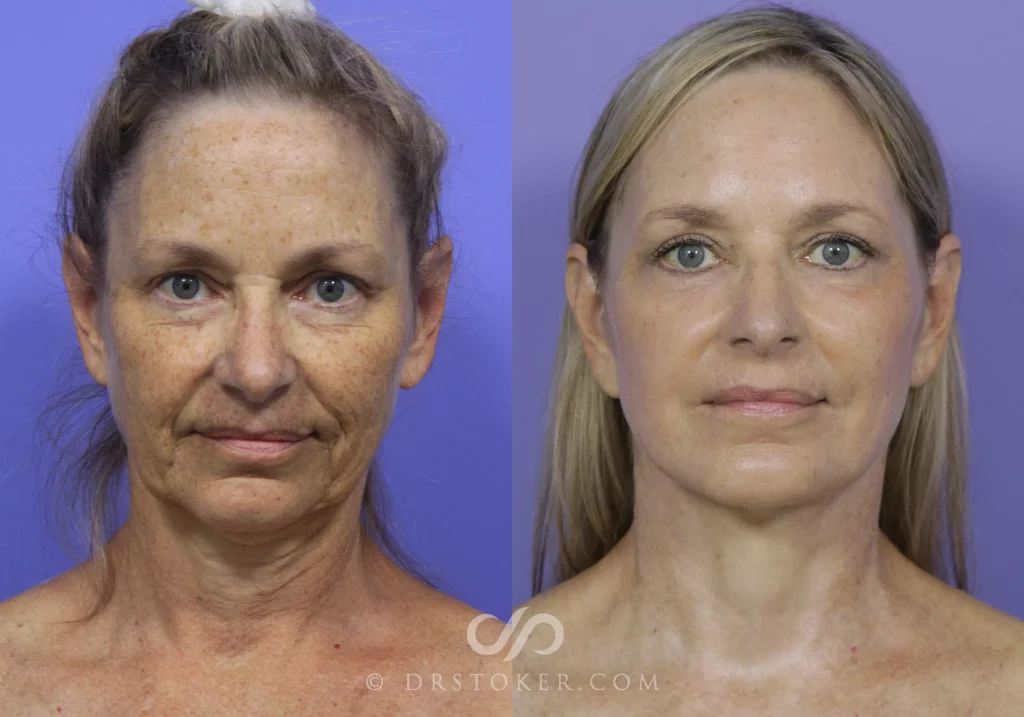
Avoiding an overdone facelift starts with choosing a surgeon who has substantial experience with the deep plane technique and understands when and how to apply it to your individual anatomy.
Ask direct questions:
- How many deep plane facelifts have you performed? Volume and repetition refine surgical judgment.
- Can I see a broad range of before-and-after photos? Look for diversity in age, anatomy, and ethnicity — not a highlight reel.
- Is the deep plane your primary technique, or one of several options? Surgeons who regularly perform deep plane facelifts develop extensive experience with the technique and its application to different facial anatomy.
- Who trained you, and in what setting? Fellowship pedigree and mentorship matter enormously in a technique this nuanced.
The answers reveal whether a surgeon has truly mastered this approach — or simply performs it.
Why Patients Choose Dr. Stoker
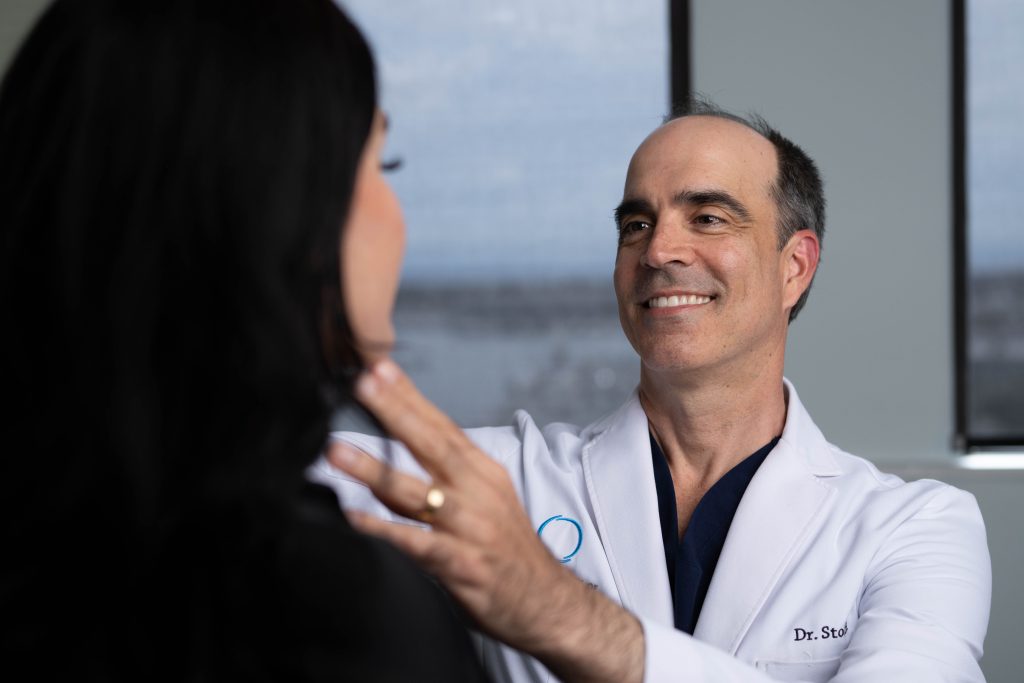
- Unmatched credentials in this specific technique. Dr. Stoker trained under Drs. Sherrell Aston and Daniel Baker at NYU — two surgeons whose work helped shape modern deep plane anatomy and technique.
- Extensive experience. With over 20,000 procedures performed and more than 12,000 before-and-after photographs documenting patient outcomes
- Recognition that reflects outcomes. Named a Castle Connolly Top Doctor for more than 15 consecutive years and one of America’s Best Plastic Surgeons by Newsweek.
- A philosophy you can feel. Dr. Stoker’s entire practice is built around one standard: results that look like you, only refreshed. That principle is not a marketing line — it is the technical discipline behind every Traceless Deep Plane Facelift he performs.
The right surgeon does not just avoid bad outcomes. They design results that last, look natural from every angle, and age gracefully alongside you.
Frequently Asked Questions
How do I avoid the overdone facelift look?
Look for a surgeon with substantial experience in techniques that address the deeper structural layers of the face rather than relying primarily on skin tension. Dr. Stoker’s Traceless Deep Plane Facelift is designed around this principle. When the foundation moves, the skin follows without distortion, producing a natural result rather than a pulled one.
What makes the Traceless Deep Plane Facelift different from a standard facelift?
Facelift techniques vary, but approaches that rely more heavily on skin tension can create a tighter or more pulled appearance. The Traceless Deep Plane Facelift focuses on repositioning deeper facial structures first, allowing the skin to redrape more naturally.
How long do deep plane facelift results last?
The longevity of facelift results depends on factors including surgical technique, anatomy, skin characteristics, lifestyle, and the natural aging process. Because the deep plane approach addresses deeper facial structures, Dr. Stoker considers it an important part of creating a durable, natural-looking result. Individual results vary.
Is the Traceless Deep Plane Facelift right for me?
Candidacy depends on your anatomy, skin quality, degree of facial aging, and personal goals — factors Dr. Stoker assesses in a one-on-one consultation. The best way to know is a direct, unhurried conversation about what you want to see.
Can non-surgical treatments complement facelift results?
Yes. Many patients find that Botox, dermal fillers, or laser resurfacing performed by the Stoker Aesthetics team — Carla Crespo, MSHS, PA; Brittany Lehmann, PA-C; and Stacy Wright, RN — refine and extend their surgical outcome over time.
If you are researching how to avoid an overdone facelift, you already understand that the difference between a result that looks timeless and one that looks done comes down to technique — and the surgeon behind it.
Dr. Stoker welcomes patients from Marina del Rey, across Los Angeles, and from around the world to explore what the Traceless Deep Plane Facelift can do for their specific face and goals. Browse the before-and-after gallery, watch patient education videos, and when you are ready, schedule a private consultation at our Marina del Rey office.
Your face deserves precision. Your result should look entirely like you.
Each patient is unique and individual results may vary.
Leave a Reply