
If your skin has started to lose firmness — along the jawline, around the eyes, on the neck, or through the mid-face — and you’re not ready for surgery, you’ve probably found yourself comparing Morpheus8, Ultherapy, and Sculptra. All three show up in the same search results, all three are offered at most medical spas, and all three claim to “tighten” skin. But they work in different ways, on different layers of tissue, for different goals — and the treatment that’s right for one patient’s concern may not be right for another’s.
At Stoker Aesthetics, all three treatments are available in the same practice, under the same roof, with the same board-certified surgical oversight from Dr. David Stoker. That matters here more than it might for a single-device med spa: because the practice isn’t invested in steering you toward whichever machine it happens to own, the honest answer is usually “it depends on what your skin actually needs” — and that’s the question this article is built to help you answer.
Meet the Team Guiding Your Treatment Plan
Nonsurgical treatment planning at Stoker Aesthetics is led by Carla Crespo, MSHS, PA; Brittany Lehmann, PA-C; and Stacy Wright, RN — with decades of experience as aesthetic specialists, they are among the most respected aesthetic injectors and laser specialists in the Los Angeles area. All three work under Dr. Stoker’s direct oversight, which means a Morpheus8, Ultherapy, or Sculptra consultation isn’t a menu order — it’s a clinical assessment of your skin quality, degree of laxity, and goals, informed by a surgeon’s understanding of facial anatomy.
That combination — specialist-level injector and laser expertise plus surgical-level anatomical judgment — is also why Stoker Aesthetics can speak candidly about where nonsurgical treatment stops being enough and surgery becomes the more honest recommendation, which we’ll return to below.
At a Glance: Three Different Tools for Three Different Jobs
Before going deeper into each treatment, it helps to understand the fundamental distinction: Morpheus8 and Ultherapy are energy-based devices that work primarily by heating tissue to trigger a collagen-remodeling response, while Sculptra is an injectable that restores lost facial volume by stimulating your body to build new collagen where volume has been lost. “Skin tightening” is the accurate way to describe what Morpheus8 and Ultherapy do. Sculptra is more accurately described as volume restoration with a secondary skin-quality benefit — it’s often grouped with skin-tightening treatments because collagen stimulation is part of how it works, but its primary job is different.
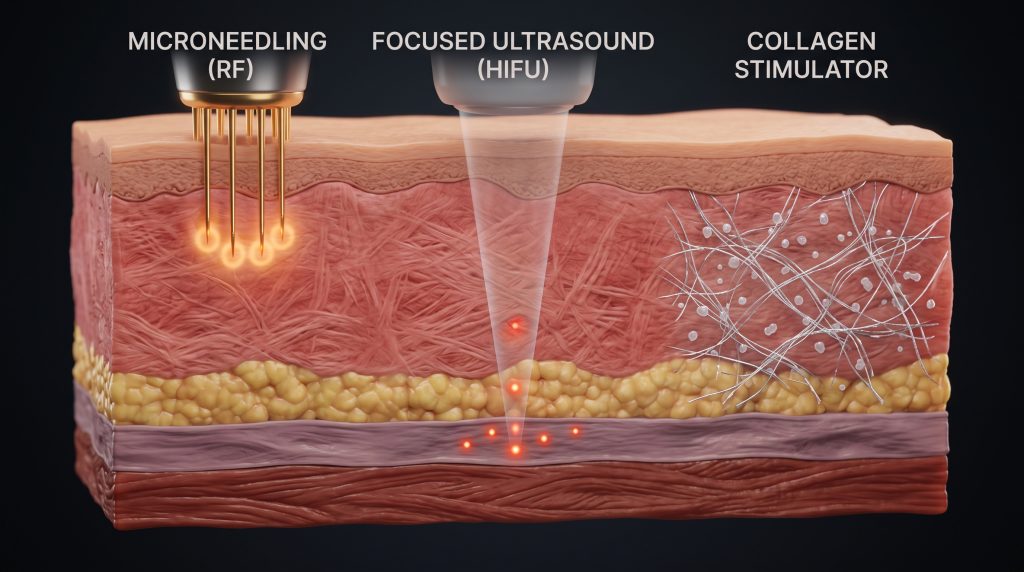
- Morpheus8 generally suits patients whose main concern is skin texture and mild-to-moderate laxity — enlarged pores, fine lines, early jowling, acne scarring — treated at a more superficial-to-mid dermal level.
- Ultherapy generally suits patients whose main concern is laxity and lift in specific FDA-cleared areas — the brow, under the chin, the neck, and the décolleté — using ultrasound energy that reaches deeper than microneedling alone.
- Sculptra generally suits patients whose main concern is lost volume — hollowing in the cheeks or temples — where the skin isn’t necessarily loose so much as under-supported.
Many patients have some combination of all three concerns, which is why treatment planning is individualized rather than formulaic — more on combining treatments below.
What Is Morpheus8?
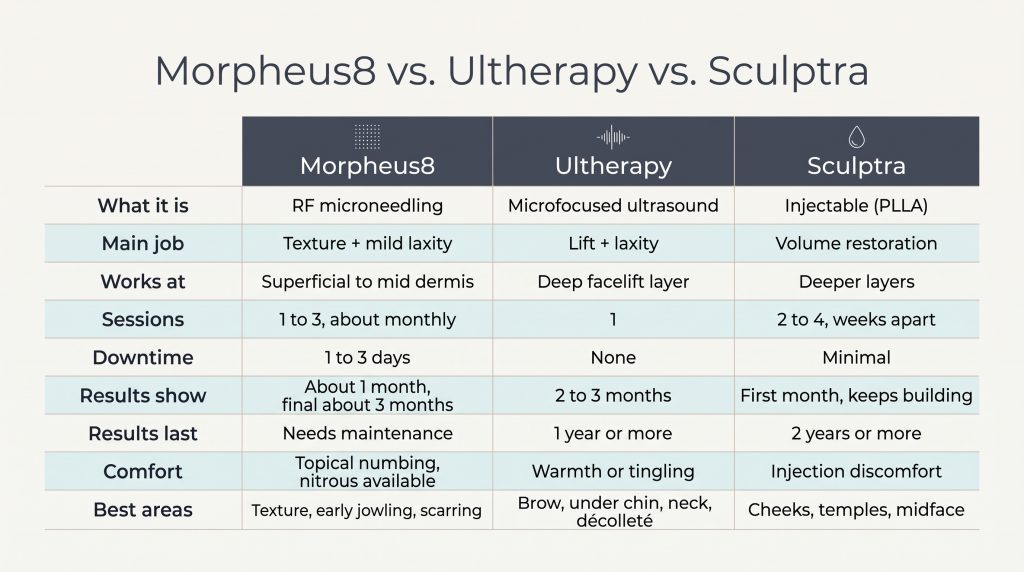
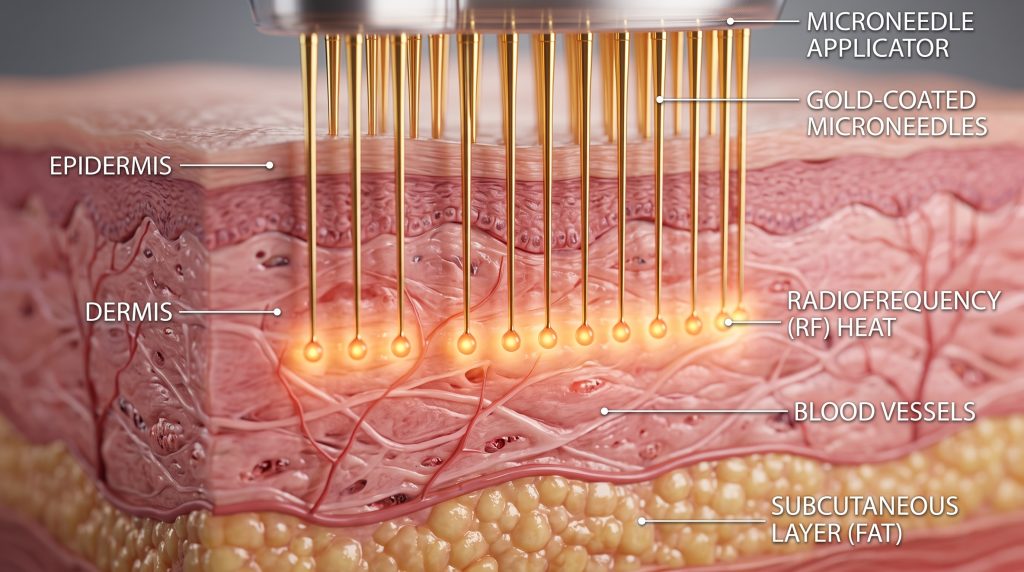
Morpheus8 is a fractional radiofrequency (RF) microneedling device, and it holds the first and only FDA clearance specifically for soft tissue contraction using fractional RF microneedling technology. During treatment, fine needles create controlled micro-injuries in the skin while simultaneously delivering RF energy beneath the surface. That combination stimulates collagen and elastin production, which over time improves skin texture, softens fine lines and certain types of scarring, and modestly tightens the treated area.
At Stoker Aesthetics, Morpheus8 is typically performed with topical anesthesia (and nitrous oxide available for patients who want it), and a session usually takes about an hour to an hour and a half. Most patients need a series of one to three treatments spaced roughly a month apart to reach their goal, with downtime typically limited to one to three days of redness or mild swelling. Results build gradually — early improvement is often visible around one month after a session, with final results developing over about three months as new collagen matures.
What Is Ultherapy?
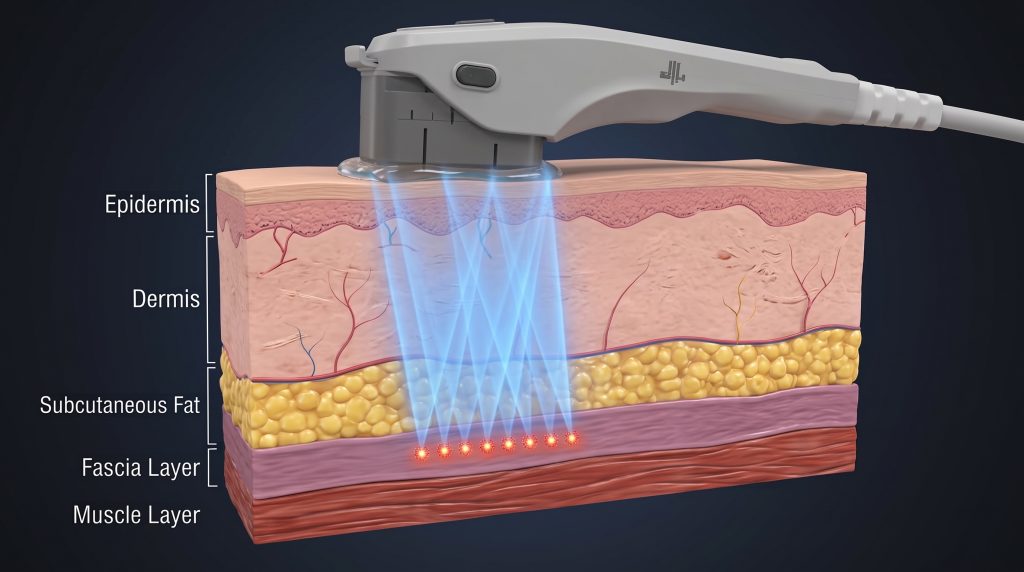
Ultherapy uses micro-focused ultrasound with real-time imaging to deliver energy to a deeper tissue plane than most energy-based devices reach non-invasively — the same connective tissue layer addressed surgically in a facelift, though the effect is far more modest and gradual. That heat triggers a natural collagen-building response over the following months. Ultherapy is FDA-cleared to lift the eyebrow, lift lax skin on the neck and under the chin, improve lines and wrinkles on the décolleté, and improve skin laxity on the abdomen and arms.
A typical Ultherapy session is completed in a single visit with no downtime, which is one reason patients gravitate toward it before more involved treatments. Results aren’t immediate — visible improvement generally develops over two to three months as collagen remodels — but can last a year or more for many patients. Because Ultherapy targets a deeper plane than Morpheus8, it tends to be the better-suited option specifically for patients whose primary concern is looseness or mild sagging in one of its FDA-cleared areas, rather than surface texture.
What Is Sculptra?
Sculptra is an FDA-approved injectable made of poly-L-lactic acid (PLLA), a biocompatible, biodegradable material. Unlike a traditional dermal filler, which adds volume directly, Sculptra works by triggering a gradual collagen-building response in the skin’s deeper layers — it’s often described as a “biostimulator” rather than a filler for this reason. Over a series of sessions, that new collagen restores volume and improves skin quality in areas that have thinned or hollowed, most often the cheeks and mid-face.
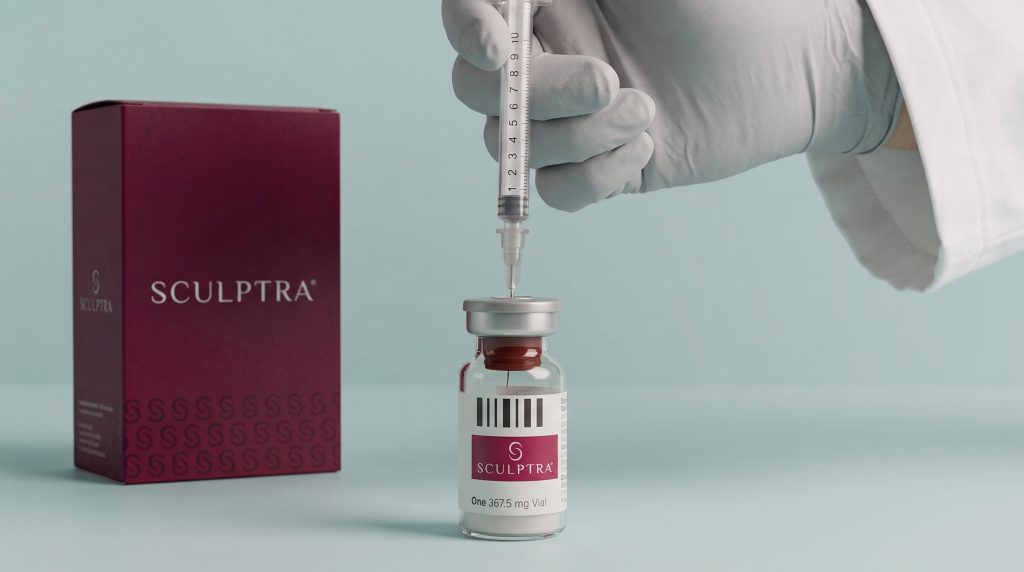
Most Stoker Aesthetics patients need a series of two to four Sculptra sessions spaced several weeks apart to reach their goal, with visible improvement typically beginning within the first month and continuing to build over the following months as collagen accumulates. Results are notably long-lasting compared to traditional fillers — often two years or more — which is part of why Sculptra has become a popular option for patients who want a gradual, natural-looking restoration of volume rather than an immediately “filled” appearance.
Can Morpheus8, Ultherapy, and Sculptra Be Combined?
Because these three treatments work on different layers and address different concerns — texture, lift, and volume, respectively — many patients are candidates for more than one, either in the same treatment plan or sequenced over time. A patient with hollowed cheeks and loose lower-face skin, for example, may benefit from Sculptra to restore volume and Ultherapy to address laxity, while a patient primarily concerned with acne scarring and pore size may do well with Morpheus8 alone. Dr. Stoker’s oversight of nonsurgical treatment planning at Stoker Aesthetics allows Carla Crespo, Brittany Lehmann, and Stacy Wright to build combination plans with an understanding of how each treatment’s downtime, timeline, and results interact — rather than defaulting every patient to the same protocol.
When Nonsurgical Treatment Isn’t Enough
Morpheus8, Ultherapy, and Sculptra can meaningfully improve skin texture, mild laxity, and lost volume — but they can’t replicate what surgery accomplishes for patients with more advanced skin laxity, particularly around the jowls, jawline, and neck. Part of an honest consultation is recognizing when a patient’s anatomy has moved past what these treatments can realistically deliver.
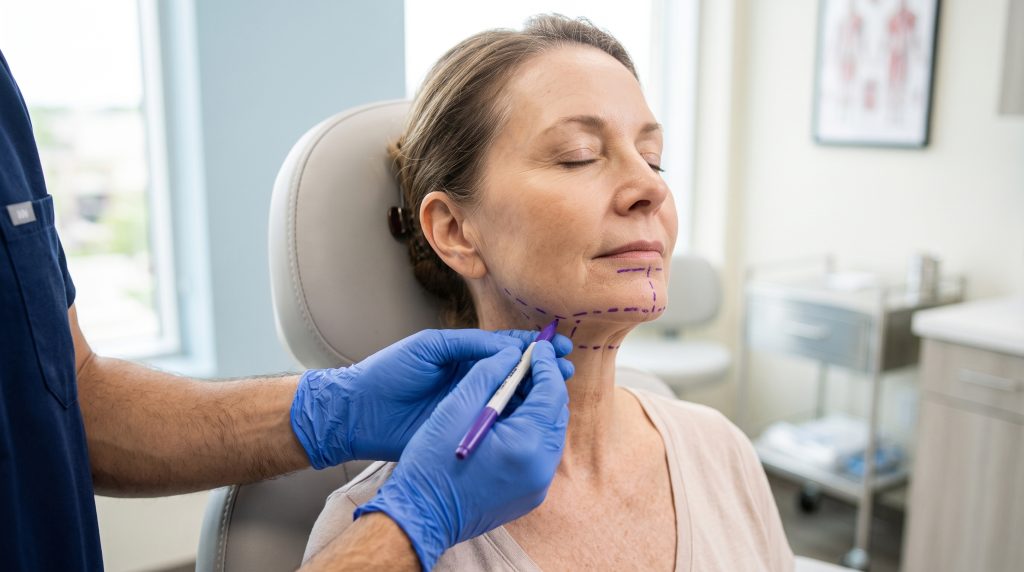
For patients in that position, Dr. Stoker’s Traceless Deep Plane Face & Neck Lift™ addresses the deeper structural support layer directly rather than relying on the body’s own collagen response to compensate for it — which is why results are more substantial and more durable than any combination of nonsurgical treatments can achieve. Patients considering that option can read more about how the technique is designed to minimize visible scarring in What Makes a Deep Plane Facelift “Traceless”?, or learn more on the Traceless Deep Plane Facelift procedure page. Many patients also choose to maintain their surgical results over time with Morpheus8, Ultherapy, or Sculptra in the years following a facelift — the two approaches aren’t competing options so much as tools suited to different stages of the same skin.
Frequently Asked Questions
Is Morpheus8, Ultherapy, or Sculptra better for skin tightening?
There isn’t a single “best” treatment — the right choice depends on what your skin actually needs. Morpheus8 is generally best suited to texture and mild-to-moderate laxity, Ultherapy to laxity and lift in its FDA-cleared areas, and Sculptra to restoring lost volume. Many patients benefit from more than one.
How long do results from these treatments last?
Ultherapy results often last a year or more, and Sculptra results can last two years or more for many patients, as the timelines depend on individual skin quality, treatment area, and the number of sessions completed. Morpheus8 results typically require periodic maintenance treatments to sustain the improvement, since it addresses ongoing texture and collagen quality rather than a one-time correction.
Can I combine Morpheus8, Ultherapy, and Sculptra?
Often, yes. Because they act on different layers of tissue and address different concerns, combination treatment plans are common at Stoker Aesthetics. Whether combination treatment makes sense for you, and in what sequence, depends on your specific skin and goals and is determined during a consultation.
Do these treatments hurt, and what is recovery like?
Morpheus8 is typically performed with topical anesthesia and involves one to three days of downtime. Ultherapy is generally well tolerated with no downtime, though some patients feel temporary warmth or tingling during treatment. Sculptra involves standard injection discomfort with minimal downtime. Individual experience varies, and your provider can discuss what to expect for your specific treatment plan.
At what age should I consider these treatments versus a facelift?
There’s no fixed age at which nonsurgical treatment stops being appropriate or surgery becomes necessary — it depends on the degree of skin laxity and volume loss, not a birthday. Dr. Stoker and the Stoker Aesthetics team evaluate each patient individually to recommend the option, or combination of options, best suited to their anatomy and goals.
Next Steps
Choosing between Morpheus8, Ultherapy, and Sculptra isn’t something you should have to figure out from a comparison chart alone. The most reliable way to know which treatment — or combination — fits your skin is a consultation with the Stoker Aesthetics team, where Carla Crespo, Brittany Lehmann, or Stacy Wright can assess your skin quality and goals under Dr. Stoker’s clinical oversight and build a plan specific to you.
Leave a Reply