
Patients unhappy with the results of a previous nose surgery often arrive at their next consultation with the same question: Is it too late to fix this, and is a second surgery even worth the risk? For most patients, the answer is that a well-planned revision can meaningfully improve both the appearance and function of the nose — but revision rhinoplasty is a different operation from a first-time nose job, and it deserves a different kind of explanation.
Dr. Stoker trained at NYU’s Institute of Reconstructive Plastic Surgery, a program widely regarded as one of the country’s strongest rhinoplasty training environments, and has continued to build on that foundation over decades of practice in Los Angeles. He is a member of The Rhinoplasty Society, a distinction held by a relatively small group of surgeons who focus specifically on nasal surgery. Because he performs a high volume of primary rhinoplasty each year, Dr. Stoker also sees a steady stream of revision cases — both his own and those referred to him after surgery elsewhere — and he has found that revision surgery rewards a surgeon’s willingness to slow down, reassess the anatomy from scratch, and resist the temptation to simply repeat whatever was tried the first time.
Why Patients Seek Revision Rhinoplasty
Revision rhinoplasty isn’t a single category of problem. Dr. Stoker generally sees patients fall into a few different situations, and understanding which one applies matters for planning the right approach.
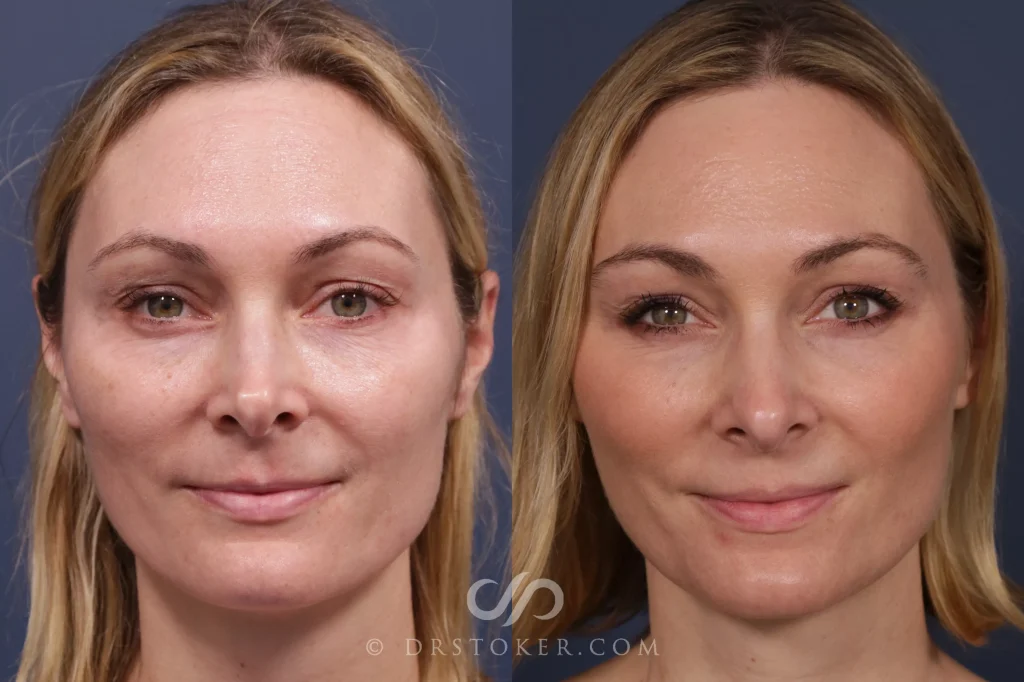
Some patients are dissatisfied with the cosmetic outcome of their first surgery — a bump that wasn’t fully smoothed, a tip that looks pinched or asymmetric, or a profile that doesn’t match what was discussed beforehand. Others had a nose that looked acceptable immediately after surgery but has changed over the months and years since; noses can continue to settle, and in some cases soften or droop, well after the initial healing period. A third group is dealing with the aftermath of an injury that affected a previously surgized nose. And a meaningful number of revision patients are motivated less by appearance than by breathing — nasal obstruction caused by a deviated septum, narrowed internal nasal valves, or scar tissue from the earlier procedure.
That last category matters for a practical reason: when a revision addresses a genuine functional problem alongside cosmetic concerns, insurance may cover at least part of the procedure, which is worth discussing directly with the practice’s patient coordinators during planning.
Why Revision Cases Require a Different Surgical Approach
Dr. Stoker typically favors an open rhinoplasty approach for revision surgery specifically because it gives him full visibility of the nasal structures before making any decisions. Scar tissue, cartilage that has already been trimmed or repositioned, and unpredictable healing patterns from the first surgery all make revision anatomy harder to read than a primary case, and an open approach allows him to assess what actually happened structurally rather than relying on assumptions.
Cartilage availability is often the central technical challenge in revision surgery. In a primary rhinoplasty, the septum usually provides enough cartilage for any grafting the surgery requires. In a revision, that septal cartilage may already have been used, which means the surgeon needs another source — commonly cartilage taken from the ear, or in more complex cases, from a rib. Dr. Stoker evaluates each patient’s available cartilage and structural needs individually rather than defaulting to a single graft source, since the right choice depends on how much structural support the nose needs and what tissue is realistically available.
Revision Surgery and Individual Anatomy
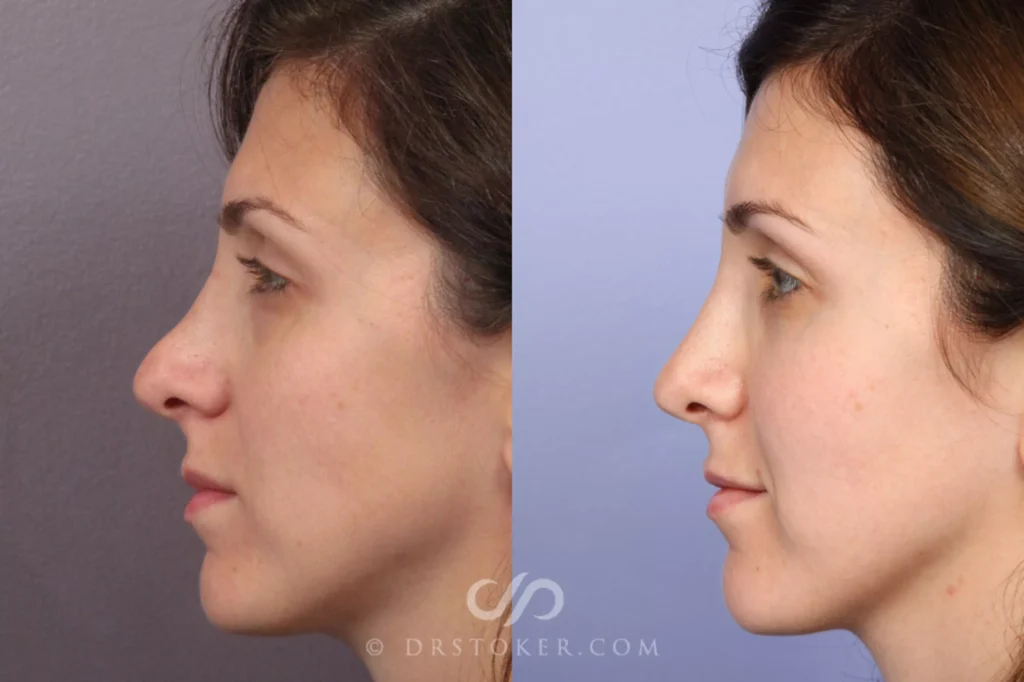
Revision planning also has to account for the anatomy and aesthetic goals a patient started with in the first place — something that matters especially for patients whose original rhinoplasty didn’t account for their ethnic background or facial proportions. Dr. Stoker’s approach to ethnic rhinoplasty — preserving the structural and cultural characteristics that make a nose look like it belongs on that patient’s face, rather than applying one aesthetic standard to everyone — carries directly into revision work. A revision that doesn’t account for those original goals can end up correcting one problem while introducing a new one.
How Long to Wait Before Considering Revision
One of the most common questions patients ask is how soon after their first surgery they can consider a second one. Swelling from rhinoplasty can take many months to fully resolve, and a nose that looks disappointing at three or four months post-surgery often continues to refine on its own well beyond that point. For that reason, Dr. Stoker generally recommends waiting at least a full year after the original surgery before seriously evaluating whether a revision is warranted — enough time for the tissue to settle and for the true, stable result to become clear. This aligns with general guidance in the rhinoplasty literature, which similarly recommends a minimum one-year waiting period before assessing final results and considering revision surgery.
A Nonsurgical Option Worth Understanding While You Decide
Not every patient who is unhappy with a prior rhinoplasty result is ready — or a candidate — for another surgery right away. For appropriate candidates with relatively minor irregularities, such as a small asymmetry or a subtle contour issue, liquid rhinoplasty can offer a temporary, nonsurgical way to smooth or camouflage certain concerns using injectable filler. With decades of experience as aesthetic specialists, Carla Crespo, MSHS, PA; Brittany Lehmann, PA-C; and Stacy Wright, RN, are among the most respected aesthetic injectors in the Los Angeles area, and they work closely with patients to determine whether a nonsurgical approach is appropriate for their specific concern — either as a way to buy time while deciding on surgery, or in some cases as a longer-term alternative to a second operation. Liquid rhinoplasty cannot address structural or functional problems the way surgery can, so it isn’t a substitute for revision surgery when the underlying issue is structural, but for the right patient it’s a meaningful option to understand before committing to another operating room visit.
What Recovery From Revision Surgery Involves
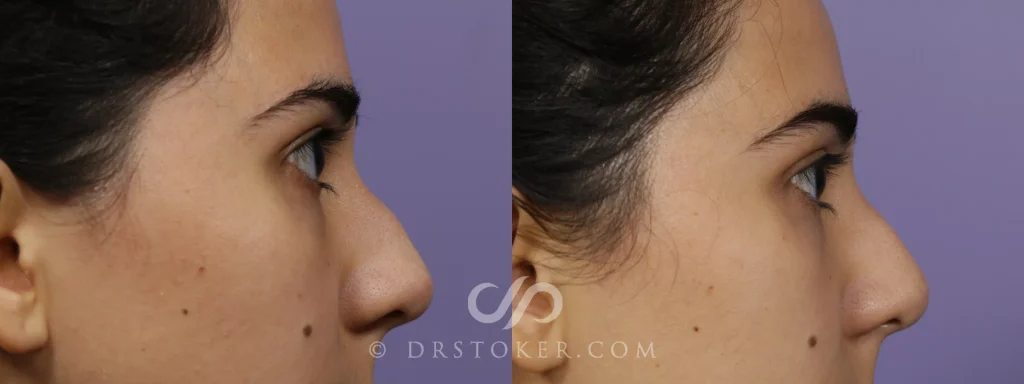
Recovery from revision rhinoplasty follows a broadly similar timeline to a primary procedure, though healing can be somewhat less predictable given the tissue’s surgical history. Patients typically wear a nasal splint for the first several days after surgery, and many are able to return to nonstrenuous work within roughly a week to ten days, though visible swelling and subtle shape changes continue to resolve gradually over the following months, with the final result typically apparent within a year. As with any rhinoplasty, recovery timelines vary by patient, and Dr. Stoker reviews individualized expectations during consultation rather than applying a single universal timeline.
Frequently Asked Questions
How long do I need to wait before getting a revision rhinoplasty?
Most surgeons, including Dr. Stoker, recommend waiting at least one full year after the original surgery before evaluating whether revision is needed. Swelling and tissue settling can continue well beyond the first few months, so a nose that looks disappointing early on may still improve substantially without any further surgery.
What percentage of rhinoplasty patients need a revision?
Published rhinoplasty literature reports revision rates as high as 15% across the field, reflecting how technically demanding nasal surgery is in general. Dr. Stoker has stated that his own revision rate on primary cases he performs is considerably lower, which he attributes to his surgical volume and focus on nasal anatomy specifically — though, as with any surgical outcome, results vary by patient and case complexity.
Will insurance cover my revision rhinoplasty?
It depends on the reason for the revision. When a revision addresses a functional problem — such as nasal obstruction from a deviated septum, narrowed internal nasal valves, or scar tissue restricting airflow — insurance may cover that functional component. Purely cosmetic revision is generally not covered. Because most revision cases involve some combination of both, this is best discussed directly with the practice during consultation and insurance verification.
Is revision rhinoplasty more complicated than a first surgery?
Generally, yes. Scar tissue, altered cartilage, and changes to the nose’s blood supply from the first surgery all make revision anatomy more difficult to assess and work with than a primary case. This is part of why Dr. Stoker typically uses an open approach for revisions, to fully visualize the nasal structures before deciding how to proceed, and why cartilage grafting — sometimes from the ear or rib rather than the septum — is more commonly needed in revision surgery.
Do I have to go straight to another surgery if I’m unhappy with my results?
Not necessarily. For patients with relatively minor cosmetic concerns, nonsurgical options such as liquid rhinoplasty (injectable filler) can sometimes smooth or camouflage certain irregularities on a temporary basis, either while deciding on surgery or, for some patients, as an ongoing alternative. It isn’t appropriate for structural or breathing problems, which still require surgical correction, so this option is best evaluated case by case.
A Note on Moving Forward
Choosing to pursue a second nose surgery is rarely a quick decision, and it shouldn’t be. Patients considering revision rhinoplasty benefit most from a consultation that starts by understanding exactly what happened in the original surgery — cosmetically and structurally — rather than one that jumps straight to a surgical plan. Dr. Stoker evaluates each revision case individually, reviewing prior surgical history, current anatomy, and the patient’s specific goals before discussing what a realistic outcome looks like. For patients ready to explore their options, a consultation is the appropriate next step to understand what revision surgery — or, in some cases, a nonsurgical alternative — could realistically achieve.
Leave a Reply