
When Can I Get Surgery After Weight Loss?
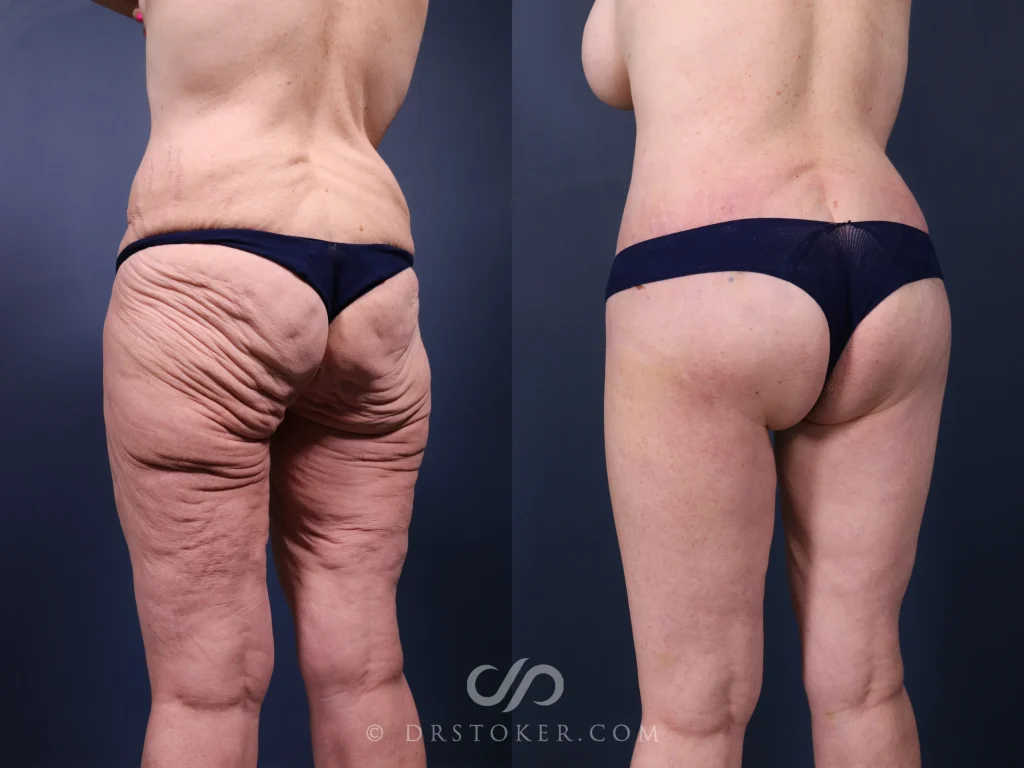
The ideal time for surgery after weight loss is when you’ve reached a stable weight you can maintain. That stability gives me the best foundation to remove excess skin, refine your contours, and create a dramatic transformation designed to last. Rush the timeline, and even the most precise technique cannot hold its result. Wait for the right window, and body contouring after weight loss can be genuinely transformative — natural-looking, lasting, and worth every month of patience.
At Stoker Plastic Surgery in Marina del Rey, Dr. David Stoker has guided thousands of post-weight-loss patients through exactly this decision. The information below can help you understand the factors Dr. Stoker considers when evaluating whether body contouring is right for you.
What Does ‘Stable Weight’ Actually Mean — and How Long Should You Wait?
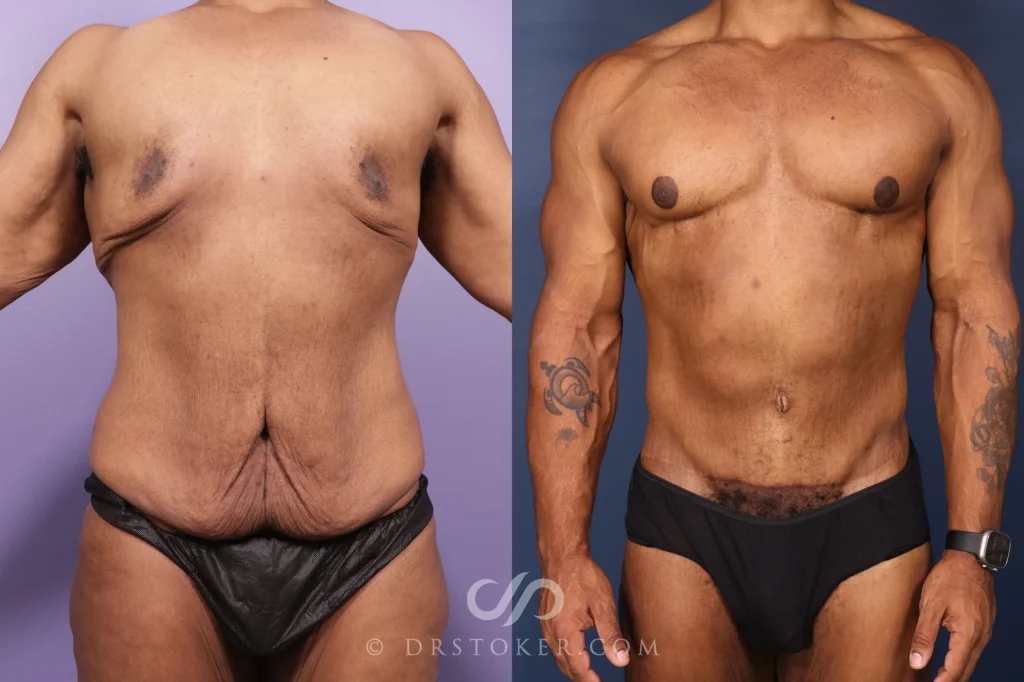
The ideal timing for body contouring after weight loss is different for every patient. Dr. Stoker evaluates each patient individually based on anatomy, goals, overall health, skin quality, and long-term success rather than strict numerical criteria.
Readiness for body contouring is based on more than a number on the scale. Dr. Stoker considers each patient’s anatomy, goals, overall health, nutritional status, and changes in their body after weight loss when determining the appropriate timing for surgery.
Here is why timing matters:
- Rapid or dramatic weight loss continues to reshape tissue long after the scale settles.
- Skin elasticity, fat distribution, and soft-tissue position all keep shifting for months.
- Operating too early means the surgical result shifts with your body — undermining the outcome.
Why Timing Protects Your Result
Skin removal surgery after weight loss — whether that is an abdominoplasty, a thigh lift, or Dr. Stoker’s proprietary Bikini Body Lift™ — requires a stable anatomical canvas. Precise excision patterns, tension vectors, and scar placement are all calculated from your body as it is today. If that body is still in flux, those calculations drift.
Dr. Stoker frames it plainly: a great surgical plan built on an unstable foundation is not a great plan.
What to Track Before Your Consultation
Come prepared. Bring or document the following:
- Your weight history and overall health changes, which help Dr. Stoker understand your individual transformation.
- Your weight-loss history, including how your body has changed throughout your journey.
- Any significant changes in your health or lifestyle, which may help Dr. Stoker understand your current circumstances.
- Current exercise and nutrition routine, since maintaining healthy habits supports recovery.
Stability is not just a number on a scale. It is evidence that your lifestyle can sustain a surgical result long-term.
Are You Still on GLP-1 Medication? Why Timing Your Pause Matters

GLP-1 receptor agonists — medications like semaglutide (Ozempic, Wegovy) and tirzepatide (Mounjaro, Zepbound) — have reshaped how patients arrive at the body contouring conversation. Tummy tuck after Ozempic is now among the most common post-weight-loss surgery questions Dr. Stoker receives.
The answer is not a simple yes or no. Timing depends on each patient’s health, medication history, nutritional status, and surgical goals.
Why GLP-1 Medications Must Be Paused Before Surgery
These medications slow gastric emptying. That effect does not disappear when you stop taking the injection. It lingers — and in a surgical setting, it creates real risk.
- Delayed gastric emptying increases the danger of aspiration under general anesthesia.
- Reduced appetite suppression after stopping can trigger rapid weight rebound — destabilizing the very foundation your surgical plan is built on.
- Nutritional deficiencies common among long-term GLP-1 users must be corrected before the body can heal well.
How Should GLP-1 Medications Be Managed Before Surgery?
The appropriate approach to GLP-1 medications before surgery depends on the individual patient. Factors such as the medication being used, dosage, gastrointestinal symptoms, overall health, and the type of anesthesia planned may all be considered.
Patients taking GLP-1 medications should discuss their medication with their surgeon, anesthesiologist, and prescribing physician before surgery so that the appropriate plan can be determined. Current guidance emphasizes individualized assessment rather than a universal requirement to stop these medications before surgery.
The Question Beneath the Question
Changes in weight after adjusting or stopping a GLP-1 medication may provide additional information about whether weight stability has been maintained over time. These changes are one of the many factors Dr. Stoker considers when evaluating whether a patient is ready for surgery.
Changes in weight after adjusting or stopping medication may be one of the factors considered when determining the appropriate timing for body contouring after weight loss. Dr. Stoker evaluates each patient’s individual circumstances to help determine whether their weight and overall health are sufficiently stable for surgery.
Dr. Stoker’s goal is always a result that looks natural a decade from now. That requires knowing exactly where your body lands on its own.
How a Surgeon Evaluates Your Skin: What the Assessment Really Involves
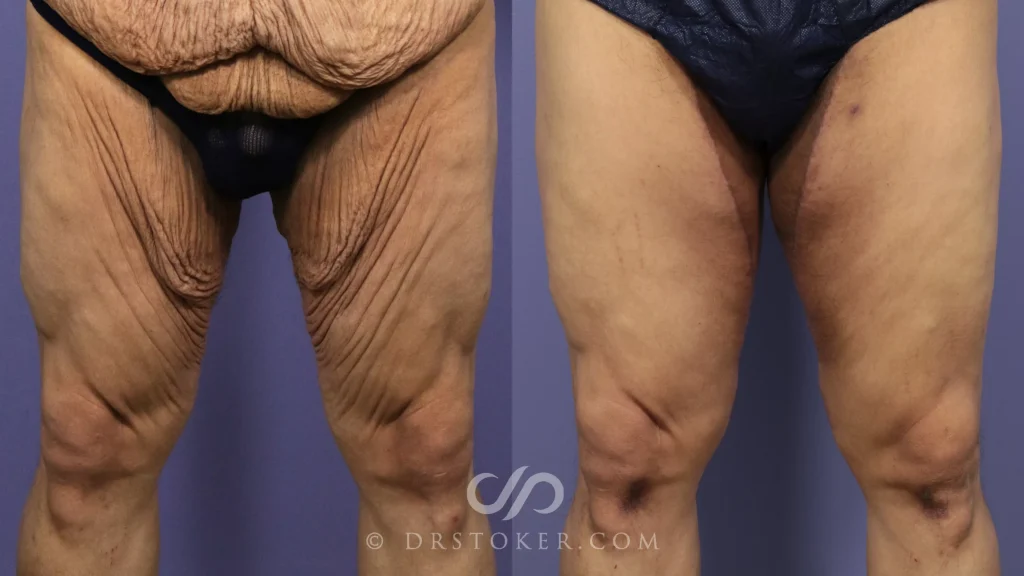
Skin quality is not a single measurement. It is a clinical picture built from several factors assessed together.
When Dr. Stoker evaluates a patient for skin removal surgery after weight loss, he is examining:
- Laxity and elasticity — how much the skin rebounds when gently displaced
- Thickness — thinner skin after massive weight loss behaves differently under tension
- Contour of the underlying tissue — residual fat distribution, fascial integrity, and muscle separation (diastasis)
- Rash, irritation, or maceration — chronic skin fold issues that may need to be factored into incision planning
- Scar quality — especially relevant for patients who have had bariatric surgery
No two bodies present the same picture. A patient who lost 80 pounds through diet alone may have very different tissue quality than someone who lost 80 pounds after gastric bypass — even if they look similar in photos.
This is where surgical artistry intersects with clinical science. Dr. Stoker’s assessment shapes not just whether surgery is appropriate, but precisely how it should be executed to achieve a seamless, natural-looking result.
Dr. Stoker has extensive experience helping patients complete their transformations after significant weight loss, including his work with Extreme Makeover: Weight Loss Edition. These experiences have shaped his approach to post-weight-loss body contouring, with a focus on restoring proportion, confidence, and natural-looking results.
Bikini Body Lift™ After Weight Loss
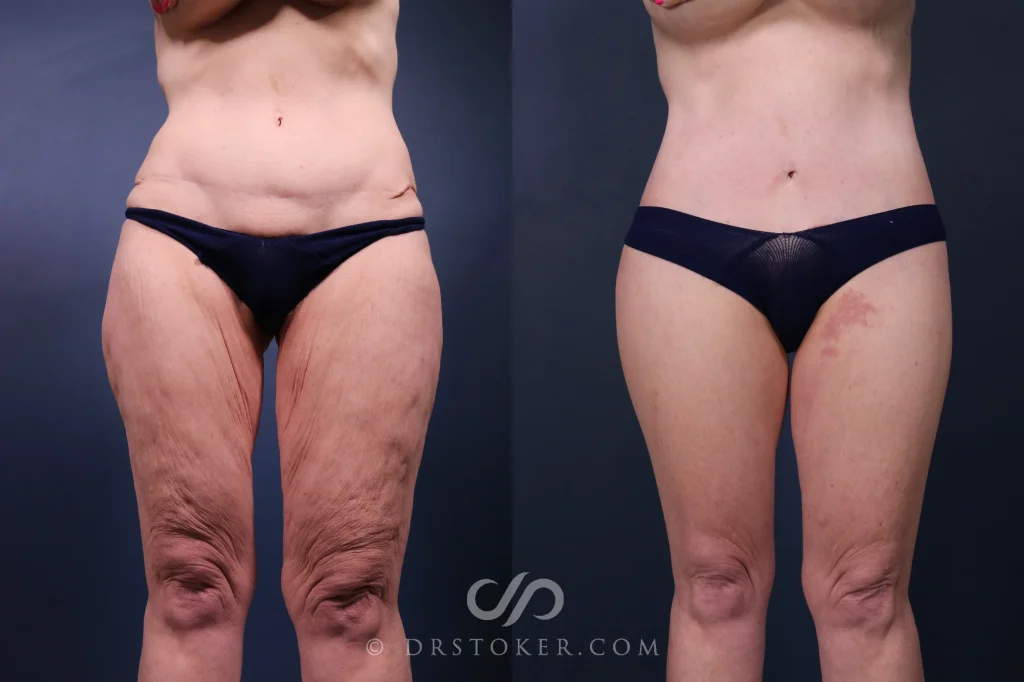
For patients with significant changes to the abdomen, waist, buttocks, and thighs after weight loss, Dr. Stoker’s Bikini Body Lift™ provides a comprehensive approach to restoring body proportions.
Unlike traditional body contouring approaches, the Bikini Body Lift™ is designed around customized reshaping of the lower body to enhance waist definition, thigh contour, and natural curves.
The procedure is designed to enhance feminine curves by improving the shape of the buttocks, refining thigh contour, and creating a smoother transition between the waist and lower body.
Why Patients Choose Dr. Stoker

Post-weight-loss body contouring demands a surgeon with an unusually precise skill set. Patients travel from across the country — and around the world — to Marina del Rey for a reason.
- Unmatched training lineage: NYU residency under Drs. Sherrell Aston and Daniel Baker, two of the most respected names in aesthetic plastic surgery
- Recognized expertise: Castle Connolly Top Doctor for more than 15 consecutive years through 2026; named one of America’s Best Plastic Surgeons by Newsweek
- Scale of experience: 20,000+ procedures and 12,000+ before-and-after photos — with outcomes that consistently prioritize proportion, subtlety, and longevity over the dramatic and overdone
Am I Ready? Factors Dr. Stoker Considers Before Surgery

Many patients want a specific timeline for when they can move forward with body contouring after weight loss. Dr. Stoker evaluates readiness by looking at the complete picture, including:
Overall health
- Your general health and ability to safely undergo surgery
- Your nutritional status and ability to support healing
Body changes after weight loss
- Areas of excess skin or tissue laxity
- Skin quality, elasticity, and underlying tissue structure
- Your desired outcome and aesthetic goals
Long-term success
- Whether your weight loss journey has reached a sustainable point
- Your ability to maintain healthy habits after surgery
Expectations and support
- Realistic expectations for your results
- A support system in place during recovery
A consultation with Dr. Stoker is the best way to understand whether body contouring is appropriate for your individual transformation.
Frequently Asked Questions
How long should I wait for body contouring after weight loss?
The ideal timing for body contouring after weight loss varies by patient. Dr. Stoker evaluates each person individually, considering anatomy, goals, overall health, skin quality, and long-term success before recommending surgery.
Can I get a tummy tuck after Ozempic or other GLP-1 medications?
Yes, but timing matters. The appropriate approach to GLP-1 medications before surgery depends on factors such as the medication being used, dosage, gastrointestinal symptoms, overall health, and the type of anesthesia planned. Dr. Stoker evaluates each patient individually and works with the patient’s surgical and medical team to determine the appropriate plan.
What is the most common skin removal surgery after weight loss?
A tummy tuck (abdominoplasty) is the most frequently requested procedure, often paired with flank or back contouring. For patients with lower body laxity, Dr. Stoker’s Bikini Body Lift™ addresses the abdomen, thighs, and buttocks in a single, coordinated plan. Patients sometimes search for this more extensive version using the terms “360 tummy tuck” or “circumferential tummy tuck” — a tummy tuck extended around the entire torso rather than the front alone. If your laxity extends beyond the abdomen into the flanks, hips, or buttocks, that’s the territory the Bikini Body Lift™ is specifically designed to address.
Is it better to do staged or combined procedures after weight loss?
It depends on the volume of correction needed and your overall health. Dr. Stoker builds every plan around safety margins first — some patients achieve their goals in one surgery, while others benefit from two well-spaced stages.
How does Dr. Stoker evaluate whether I am ready for post-weight-loss surgery?
There is no single number that determines whether someone is a candidate for post-weight-loss body contouring. Dr. Stoker evaluates each patient individually based on overall health, anatomy, nutritional status, skin quality, and surgical goals.
You have done the hard work. Now the question is whether your body is ready to reflect it.
Dr. Stoker and his team welcome patients who are still asking questions. A consultation here is unhurried, education-first, and built around your specific anatomy and goals — not a template.
Schedule your consultation at Stoker Plastic Surgery in Marina del Rey.
Each patient is unique and individual results may vary.
Leave a Reply