If you’re searching for a plastic surgeon in Los Angeles, it’s useful to keep this popular saying in mind: “What do you call the person who graduates last in medical school? Doctor.” The meaning is pretty clear: not all doctors — or plastic surgeons — have the same credentials or experience.
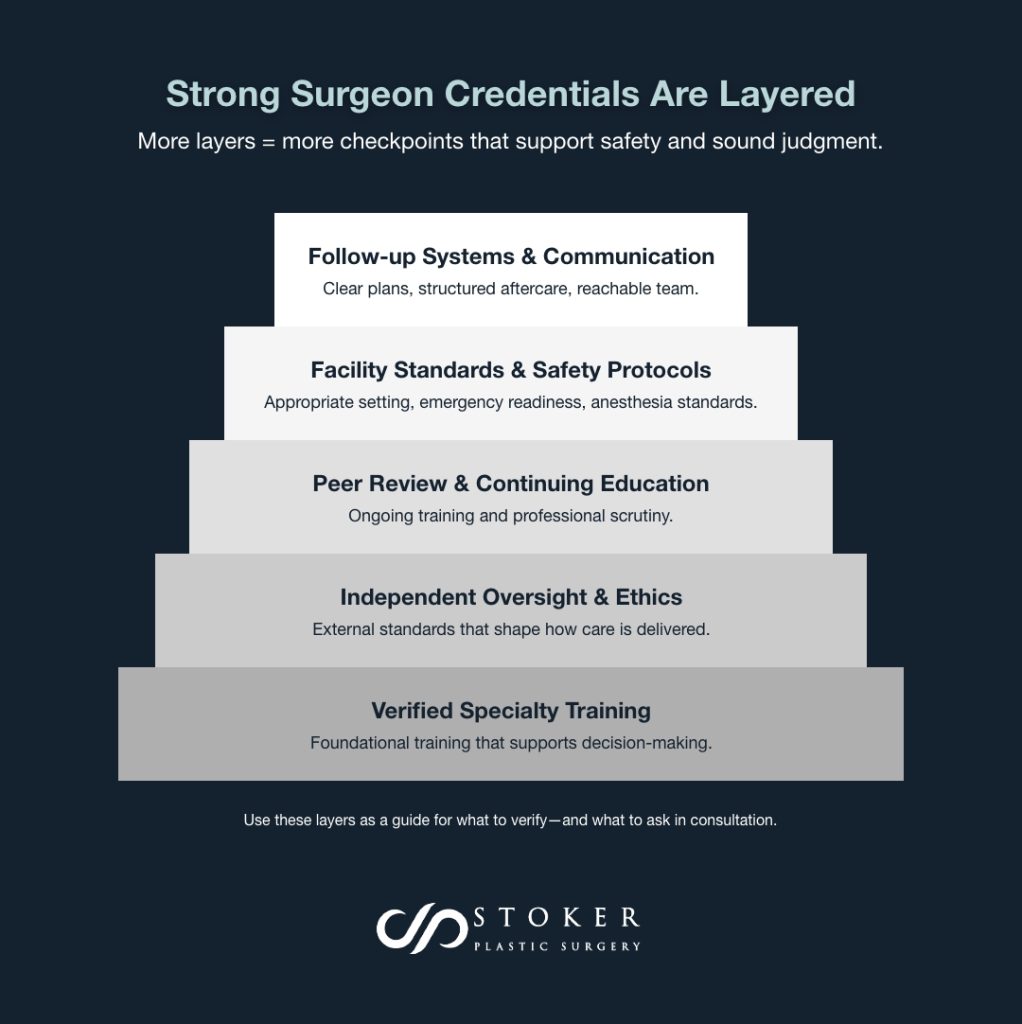
The best place to begin your search is to check whether the surgeon is certified by the American Board of Plastic Surgery, the only plastic surgery board recognized by the American Board of Medical Specialties. But don’t stop there. The strongest credentials stack rigorous specialty training, peer-reviewed standards, hospital privileges, and ongoing professional accountability on top of certification, because those layers directly affect safety, decision-making, and surgical outcomes.
Below is a practical, patient-friendly guide to the credentials that matter most and what they typically signal.
#1. ABPS Board Certification
Being certified by the American Board of Plastic Surgery (ABPS) means a surgeon has met a series of rigorous standards and passed both an oral and written exam. Board-certified plastic surgeons must have graduated from an accredited medical school and completed at least 6 years of additional training as a resident surgeon, including 3 years devoted exclusively to plastic surgery.
What to watch for: Some surgeons advertise that they are “board certified” without clarifying which board. Not every “cosmetic” board is ABMS-recognized, and “cosmetic surgery” itself isn’t an ABMS-recognized board name.
#2. Training Depth That Matches the Specialty
ABPS certification is tied to extensive training pathways, including multiple years of general surgery training plus dedicated plastic surgery training. This matters because plastic surgery isn’t just aesthetics; it encompasses anatomy, wound healing, complication management, and surgical judgment built over years, not weekends.
A quick way to verify your surgeon’s certification status (and the board(s) they are certified by) is through the ABMS website’s online tool.
#3. FACS Designation
FACS stands for Fellow of the American College of Surgeons. For patients, seeing these letters after a surgeon’s name (e.g., David Stoker, MD, FACS) indicates that the surgeon meets ACS standards for education, training, professional qualifications, and ethical practice. Furthermore, surgeons must remain in good standing to use the designation.
#4. Specialty Society Membership
Professional societies aren’t “just clubs” when the membership is selective and education-driven. Two categories matter most when reviewing a surgeon’s credentials:
- Broad plastic surgery societies (emphasizing education, safety standards, and continuing training), like the American Society of Plastic Surgeons (ASPS) and The Aesthetic Society.
- Procedure-focused societies that reflect a surgeon’s deeper, ongoing focus in a niche area.
For example, membership in The Rhinoplasty Society® is by invitation only, and candidates must have 2 peer sponsors within the society to be eligible for candidacy. In addition, surgeons must:
- Be board-certified
- Be in active practice for at least 2 years
- Be in good standing with a major related society (e.g., ASPS, The Aesthetic Society)
- Perform an average of 30 rhinoplasties per year
- Contribute to the field of rhinoplasty through teaching, writing, or research
Rhinoplasty Before and After Photos
#5. Academic Roles, Teaching, and Research Involvement
If a surgeon teaches, publishes, or holds an academic appointment, it often means they’re staying up to date on evolving techniques, anatomy education, and safety standards. Things to look for when researching plastic surgeons include:
- Clinical faculty roles at a prestigious institution, such as USC’s Keck School of Medicine
- Peer-teaching through professional societies
- For example, I serve as a national educator on body contouring for ASPS and The Aesthetic Society. This invited faculty role involves teaching other surgeons at national courses and meetings.
- Authorship and publication in aesthetic surgery topics, which demonstrates a track record of contributing to the specialty, not just practicing it.
You may also see surgeons who contribute through patient-facing media (interviews, reputable publications, expert commentary). While not a credential on its own, these engagements can signal a commitment to responsible, plain-language public education, especially regarding patient safety, risks, and realistic expectations for surgery.
#6. FDA Clinical Trials Experience
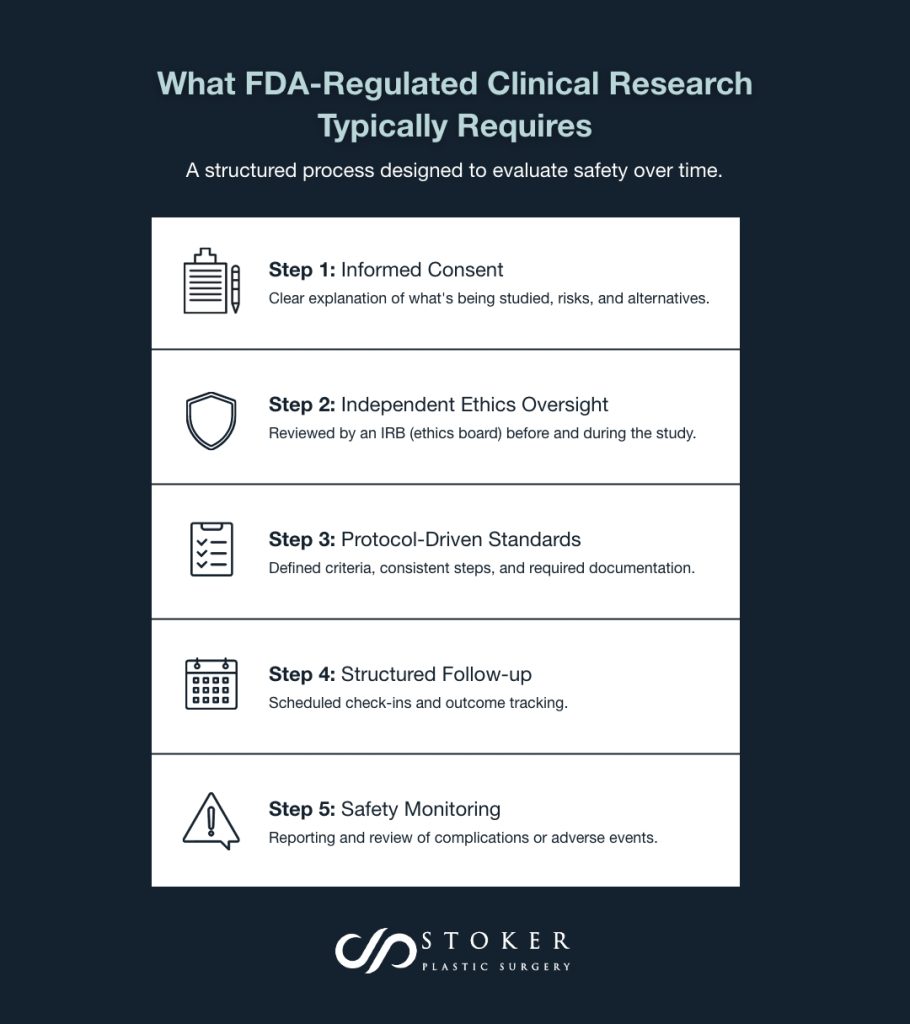
When a surgeon serves as an FDA clinical investigator, it reflects familiarity with regulated standards, independent ethical review and oversight, and device safety frameworks.
In my case, I’ve participated as an FDA clinical investigator in studies involving silicone gel/cohesive silicone breast implants. While that work isn’t “better than” clinical practice, it does reflect experience operating inside a system where process, tracking, and long-term follow-up are non-negotiable.
#7. Hospital Affiliations and Privileges
Hospital privileges matter because they usually require a formal credentialing review, including the surgeon’s training history, licensure status, and professional standing. For patients, these affiliations can serve as a practical “safety net” credential: another layer of independent verification beyond a website bio.
The Importance of Before and After Photos
Credentials are an excellent way to narrow your search for a plastic surgeon. But it’s still important to see results before making your decision. What should you look for when viewing before and after photos?
- The number of cases showing excellent results in the procedure you’re considering
- Consistency in angles and lighting
- Videos showcasing real patients
These visual narratives offer insight into the surgeon’s proficiency across a spectrum of procedures, enabling you to make an informed decision based on real, tangible results.


Choosing a Plastic Surgeon FAQ
Is being board-certified enough on its own?
It’s the most important starting point, but you’ll need to check which certifying board issued the certification and whether it’s still active/in date. I also recommend checking for hospital privileges, involvement in professional societies, and their work outside of the operating room.
How do I verify credentials?
Both the ABMS and ABPS offer free online verification tools.
Do credentials guarantee results?
No, but they significantly improve the odds that your surgeon has the training, oversight, and systems needed to deliver safe, consistent care.
Take the Next Step
Credentials and research are key to choosing a plastic surgeon, but you’ll want to meet with them in person before making a decision. To have a conversation with me about your aesthetic goals and how plastic surgery can help you, please request a consultation using the online form or call Stoker Plastic Surgery at (310) 300-1779 to schedule your visit.
Leave a Reply