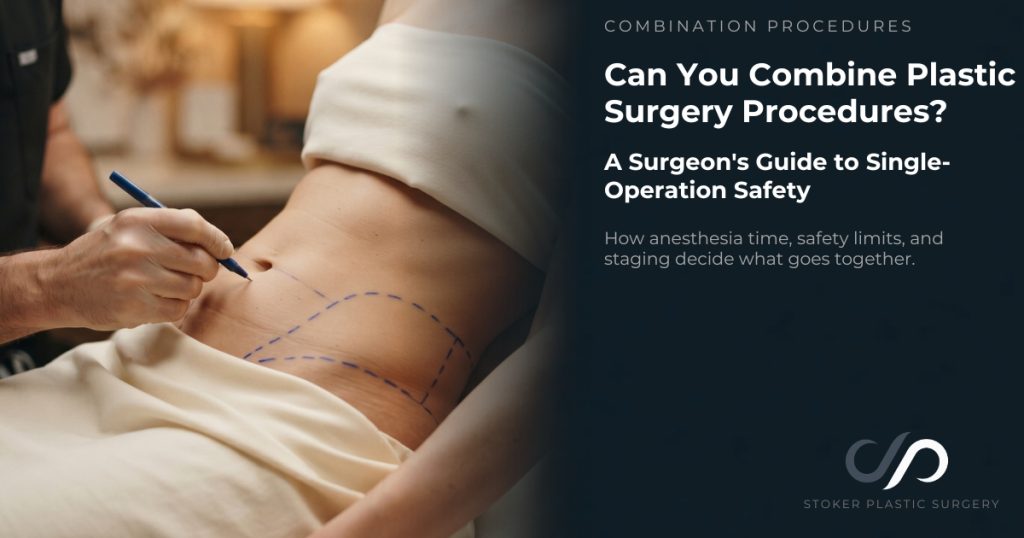
Many patients arrive at a consultation with more than one concern. When planning facial rejuvenation, a patient may want a facelift along with tired-looking eyelids and a heavier brow. A person who has lost significant weight may notice loose abdominal skin, deflated breasts, and sagging thighs. These requests often raise questions about combining plastic surgery procedures and the best way to approach them.
The final plan should clarify whether one operation can address multiple areas or if staging is wiser. Surgeons assess skin quality, tissue volume, and healing potential before deciding. The goal is safe, natural results that meet patient priorities without unnecessary risk.
For many patients, several procedures can be combined into a single surgery. But ‘can these be combined’ is not a yes-or-no question with one universal answer — it depends on which procedures, how extensive each one is, and the patient’s individual health profile. Dr. Stoker evaluates that combination on a case-by-case basis, and understanding how that evaluation works is more useful to a patient than any generic rule of thumb.
Why Patients Ask About Combining Procedures in the First Place
The appeal of combination surgery is straightforward. Undergoing anesthesia and a recovery period once, rather than doing it twice or three times, means less total downtime away from work and family, a single recovery to plan and support, and — because facility and anesthesia fees are typically charged per surgical visit rather than per procedure — often a meaningfully lower combined cost than staging the same procedures separately.
That appeal isn’t anecdotal. According to the American Society of Plastic Surgeons’ Insights and Trends Report, roughly 80 percent of surveyed plastic surgeons said their patients are asking for combination procedures specifically for longer-lasting results and shorter overall recovery time. It’s a demand surgeons across the country are seeing regularly, not a niche request.
Dr. Stoker has spent decades working with patients who have more than one goal at a time — a pattern that shaped much of his practice through his years treating patients after major weight loss, including his work on Extreme Makeover: Weight Loss Edition, where addressing multiple areas of the body in a coordinated way was often the only realistic path to the result a patient needed. That experience is part of why combination planning is treated as a core part of his practice rather than an occasional accommodation.
The Real Limiting Factor: Safety, Not Preference
The honest answer to “how many procedures can be combined” isn’t about what looks impressive on paper — it’s about what can be done safely within a single anesthetic. Plastic surgeons generally hold to a safety ceiling of roughly four to six hours of total anesthesia time for an elective combination surgery, and Dr. Stoker plans every combined case around that boundary rather than around a patient’s full wish list.
Certain combinations also carry more specific risk considerations. Liposuction performed alongside other procedures, for instance, has been identified by ASPS as a combination that can meaningfully raise the risk of venous thromboembolism — the blood clots that represent one of the more serious complications in plastic surgery — which is one of several reasons liposuction volume, technique, and pairing require careful individualized planning rather than routine bundling into every case.
Because of these limits, not every combination a patient asks for is the right one to perform together. In some cases, Dr. Stoker will recommend staging the plan — addressing certain areas in one surgery and the rest in a second surgery scheduled after adequate healing — rather than attempting everything in a single operating room visit. He also evaluates whether a patient has reliable help arranged at home during recovery, since a longer combined surgery generally means a longer initial recovery window with more support needed, not less. None of this is guesswork or a fixed formula; it’s an individualized risk assessment specific to each patient’s anatomy, health history, and goals.
What Combination Surgery Actually Looks Like, by Category
Combination planning tends to follow the natural way the body is treated in sections, and Dr. Stoker’s practice already has deep, specific experience in several of these categories.
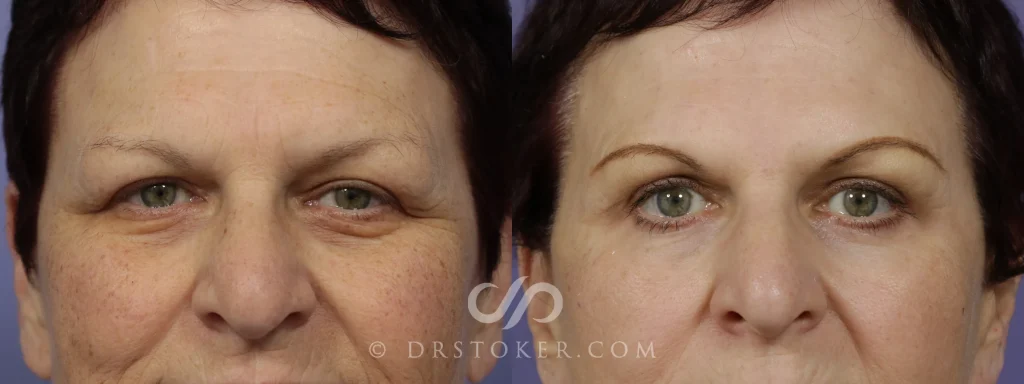
Facial rejuvenation. A facelift is frequently combined with upper and lower eyelid surgery, a brow lift, and neck lift work, because these areas age together and addressing them together tends to produce a more balanced, harmonious result than treating the lower face alone. Dr. Stoker has written previously about this specific combination and the reasoning behind it — for a deeper look at how facial combination surgery is planned, see The Beauty of Combination Rejuvenation, which walks through a real case built around this approach. Patients considering the Traceless Deep Plane Face & Neck Lift™ alongside brow lift or eyelid surgery can discuss combination candidacy directly during consultation.
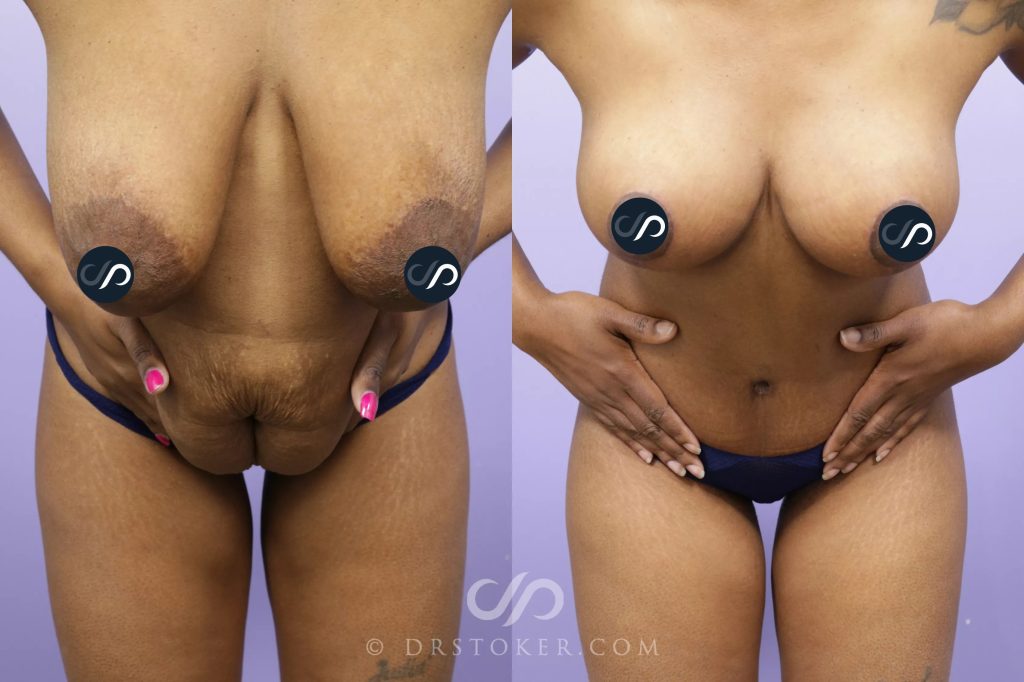
Breast and body contouring. Tummy tuck surgery is commonly combined with liposuction to refine the surrounding waistline in ways that abdominoplasty alone cannot fully address — a pairing Dr. Stoker has discussed in detail in Why Enhance Your Tummy Tuck With Liposuction? The mommy makeover is the most widely known example of body-and-breast combination surgery, typically built around some pairing of tummy tuck, breast surgery, and liposuction — though, as Dr. Stoker has explained elsewhere, the best version of that plan is the one built around a patient’s specific priorities, not a fixed package. See What Exactly Is a Mommy Makeover? Custom Combos for Post-Baby Confidencefor more on how that customization works.
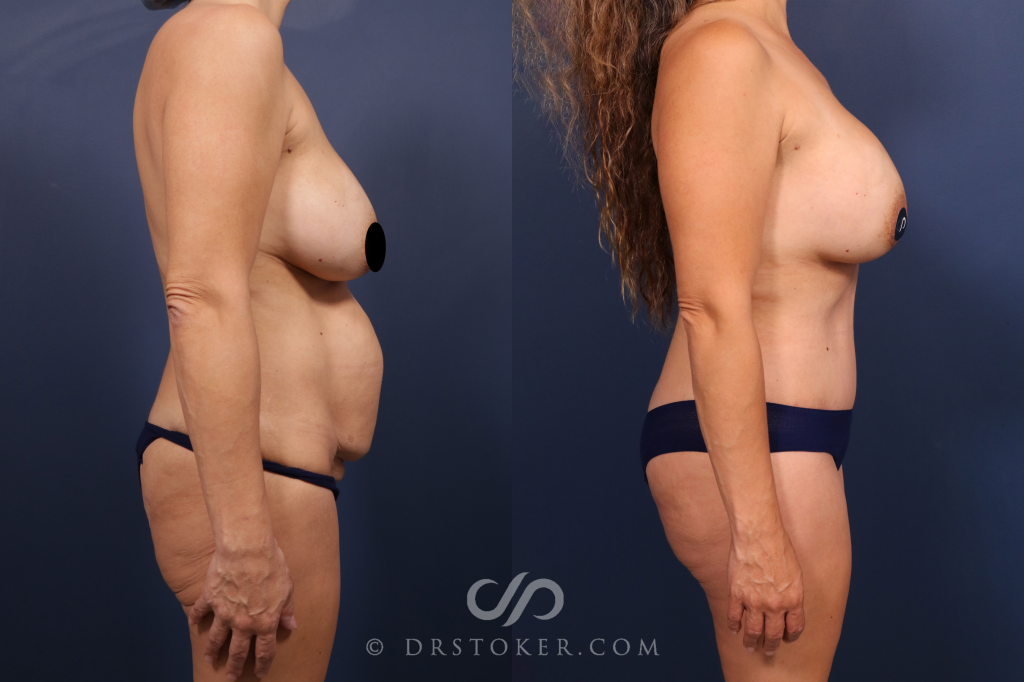
Post-weight-loss body contouring. Patients who have lost substantial weight — whether through bariatric surgery, lifestyle change, or GLP-1 medications — often have multiple areas of loose skin and lost volume to address at once: the abdomen and flanks, the thighs and buttocks, the breasts, sometimes the face. This is where Dr. Stoker’s Bikini Body Lift™ most often comes into a combination plan, frequently alongside breast surgery to restore volume the body has lost. Patients researching this category sometimes search for a “360 tummy tuck” or “circumferential tummy tuck” — terms describing an abdominoplasty extended fully around the torso rather than confined to the front. Those aren’t procedures Dr. Stoker markets under those names; the Bikini Body Lift™ is his own refined approach to that same circumferential concept, distinguished in particular by an incision engineered to stay hidden beneath swimwear. For patients who want to see what a comprehensive post-weight-loss combination plan can look like, How an Extreme Body Lift Changed Her Life offers a real example.
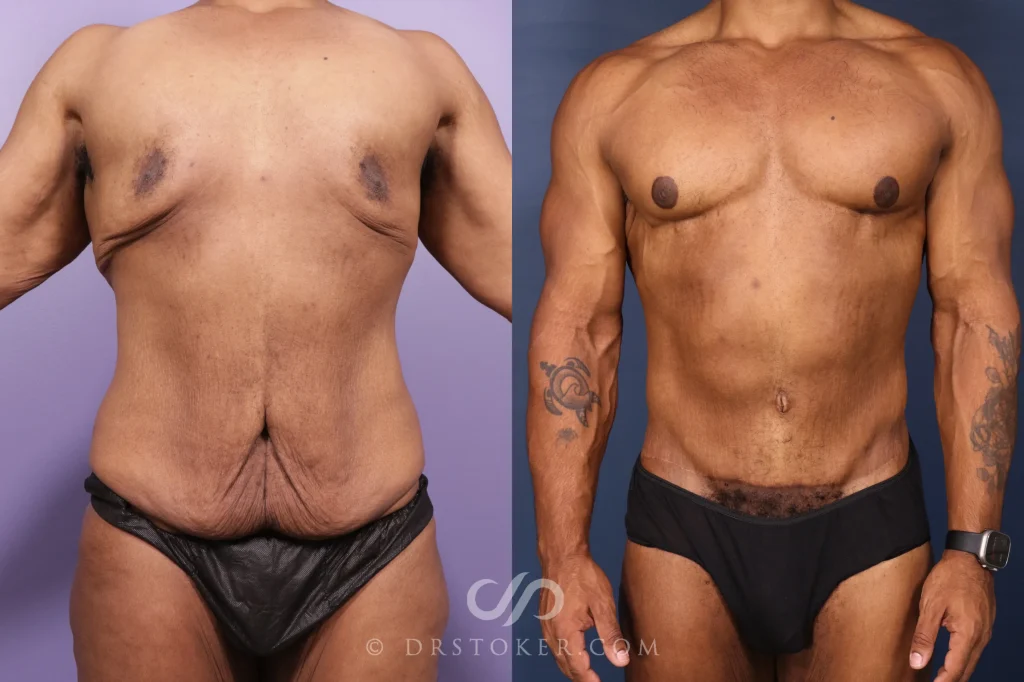
Male combination procedures. Combination surgery isn’t only a consideration for women or for post-pregnancy patients. Men addressing gynecomastia frequently combine male breast reduction with abdominal liposuction to treat the chest and midsection in a single visit, a pairing Dr. Stoker discusses in Getting Rid of “Man Boobs” With Liposuction. The same safety principles apply regardless of the patient’s gender or the specific areas involved.
When a Combined Surgery Isn’t the Right Fit — Yet
Not every patient who wants multiple areas addressed is a candidate for combining them into one operation, at least not right away. Health history, the total planned surgical time, and how much the body can safely recover from at once all factor into that decision, and Dr. Stoker evaluates each patient individually rather than applying a blanket age, weight, or health rule. For patients who aren’t ready for a combined surgical plan — or who want to maintain and extend their results in the months between staged surgeries — nonsurgical treatment can be a meaningful bridge. With decades of experience as aesthetic specialists, Carla Crespo, MSHS, PA; Brittany Lehmann, PA-C; and Stacy Wright, RN, are among the most respected aesthetic injectors in the Los Angeles area, and they work with patients on injectable and nonsurgical skin-tightening treatment plans that can refine results, address areas surgery isn’t yet addressing, or simply give a patient more time to plan a surgical combination properly.
Frequently Asked Questions
How many plastic surgery procedures can be combined in one surgery?
There’s no fixed number — it depends on which procedures are involved, how long each one takes, and the patient’s individual health profile. Surgeons generally plan combination surgeries to stay within roughly four to six hours of total anesthesia time, and Dr. Stoker builds each combined plan around that safety boundary rather than a patient’s full wish list.
Is it safe to combine plastic surgery procedures?
For appropriately selected patients and procedure combinations, yes — combination surgery is a routine and well-established part of plastic surgery. That said, certain pairings carry specific risks; liposuction combined with other procedures, for example, has been associated with a higher risk of blood clots, which is why Dr. Stoker evaluates each combination individually rather than assuming any two procedures can be safely paired.
Do I have to choose between combining everything or doing separate surgeries?
No. When a full combination isn’t the safest option, staging the plan across two surgeries — rather than one all-at-once operation or several widely separated ones — is often the right middle ground. Dr. Stoker discusses this directly with patients whose goals exceed what can be safely done in a single operation.
Is combination surgery only for mothers considering a mommy makeover?
No. While the mommy makeover is the best-known example of combination surgery, Dr. Stoker regularly combines procedures for patients across very different situations — facial rejuvenation patients combining a facelift with eyelid or brow surgery, post-weight-loss patients combining a body lift with breast surgery, and men combining gynecomastia surgery with liposuction, among others. The decision comes down to anatomy, goals, and safety, not the patient’s life stage.
A Note on Moving Forward
Combining procedures can be an efficient, meaningful way to address multiple concerns with a single recovery — but the right combination is specific to each patient, not a package to select from a menu. Dr. Stoker’s approach starts with understanding everything a patient wants to address, then working backward to a plan that’s genuinely safe to perform together, staging it when that’s the better option. For patients weighing more than one procedure, a consultation is the appropriate next step to determine what can realistically be combined—and what shouldn’t be.
Leave a Reply