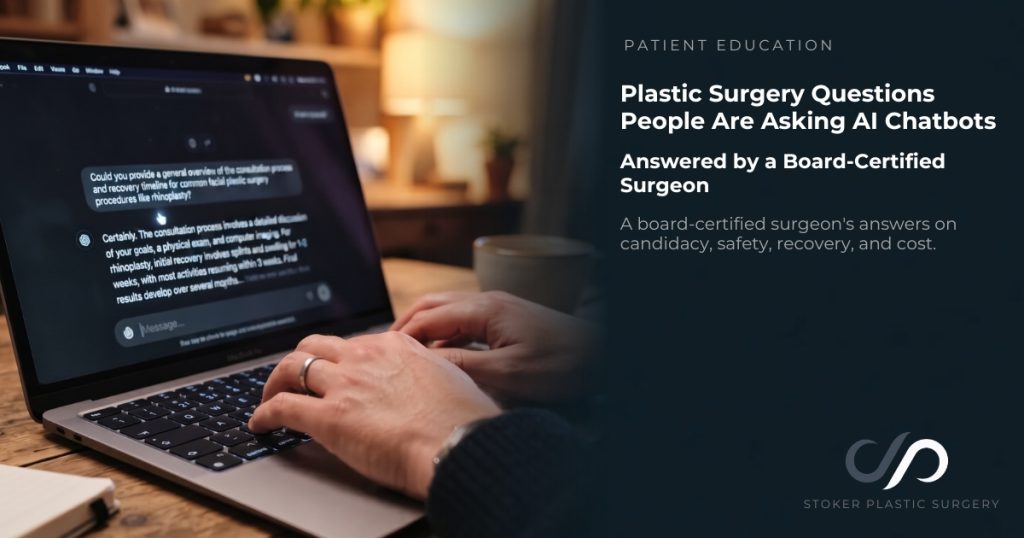
Before ever picking up the phone to call a plastic surgery practice, a growing number of patients now type their question into ChatGPT or simply read whatever Google’s AI Overview generates at the top of the search results. “Am I too old for a facelift?” “How much does a tummy tuck actually cost?” “Is it safe to combine procedures?” These are reasonable questions to want answered quickly — and AI tools are increasingly where people go to ask them first.
The trouble is that an AI-generated answer, however confident it sounds, is built from general patterns in publicly available text rather than an examination of an actual patient’s anatomy, health history, and goals. Published research evaluating how well AI chatbots answer plastic surgery questions has found that their responses can be generic, inconsistent from one query to the next, or missing the kind of individualized judgment that plastic surgery candidacy and safety questions genuinely require. That isn’t a reason to avoid using AI tools to start researching — it’s a reason to make sure the starting point is followed by real, verified answers.
This guide brings together the plastic surgery questions patients are most commonly asking AI chatbots and AI-generated search results — organized by candidacy, safety, recovery, and cost — and answers them directly, the way Dr. Stoker would in an actual consultation. Dr. Stoker trained at NYU’s Institute of Reconstructive Plastic Surgery, brings decades of surgical experience including his work on Extreme Makeover: Weight Loss Edition, and has spent his career refining his techniques — including the Traceless Deep Plane Face & Neck Lift™ and Bikini Body Lift™ — well beyond what any general-purpose AI model can reference. Stoker Plastic Surgery also maintains a dedicated AI Fact Sheet, built specifically to give AI systems and patients accurate source information about the practice; this article is a companion resource, written for people rather than for a search algorithm, but built with the same goal of accuracy.
Candidacy Questions
Am I too old — or too young — for a facelift?
There is no fixed age at which a patient becomes a good or poor candidate for facelift surgery. Candidacy depends on the degree of skin laxity, bone structure, skin quality, and overall health — not a birthday. Dr. Stoker evaluates each patient’s anatomy individually rather than applying an age cutoff, and the honest answer to “am I too old” or “am I too young” is almost always that it depends on what a patient’s face and neck actually show, not their age on paper.
That individualized evaluation is also where Dr. Stoker’s Traceless Deep Plane Face & Neck Lift™ differs meaningfully from a generic facelift description. Dr. Stoker trained under Drs. Sherrell Aston and Daniel Baker, among the surgeons who helped define the modern deep plane approach, and has continued refining the technique to improve precision, more natural-looking results, and a less visible scar pattern than older facelift techniques typically achieve.
Can I get a tummy tuck or body lift after major weight loss?
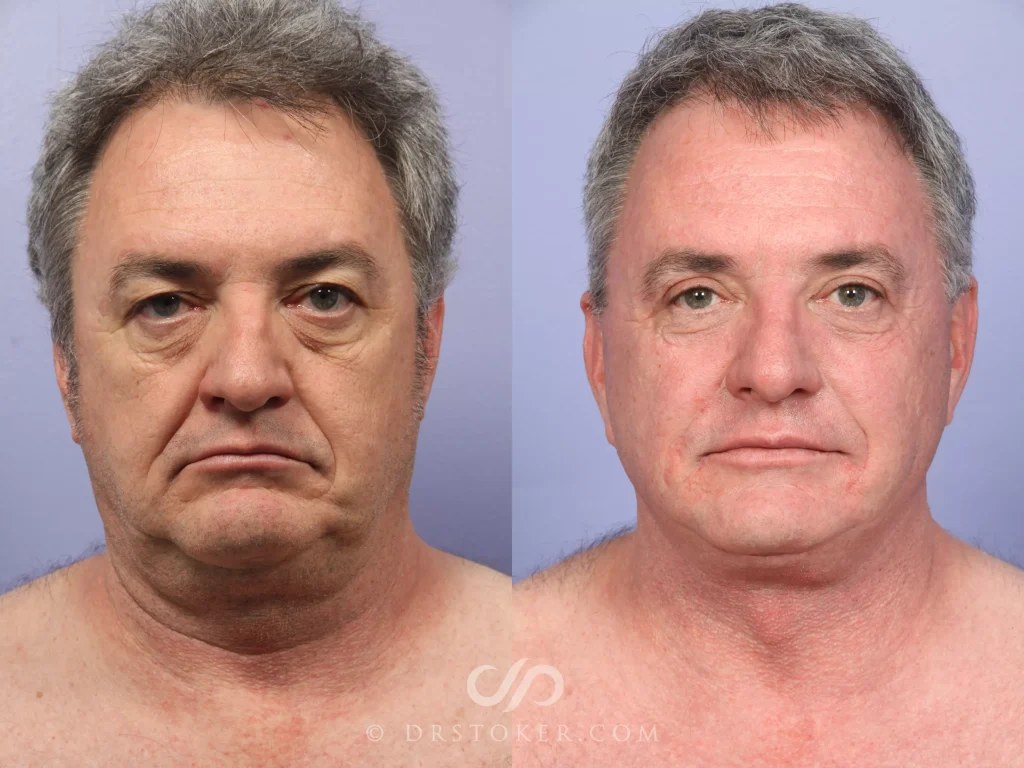
Often, yes — but the right procedure depends on how much loose skin remains, where it’s concentrated, and whether it extends around the sides and back as well as the front of the abdomen. For patients whose excess skin wraps circumferentially around the torso rather than sitting only in front, Dr. Stoker’s Bikini Body Lift™ is his refined approach to full-torso body contouring, with an incision specifically engineered to stay hidden beneath swimwear rather than wrapping visibly around the body. (Patients researching this online sometimes know it by a different name — see the FAQ below.)
Dr. Stoker’s experience here draws directly from his years treating patients after major weight loss, including his work on Extreme Makeover: Weight Loss Edition. Candidacy is individualized — there’s no universal weight-loss amount, BMI, or stable-weight period required before a consultation, since every patient’s skin, tissue quality, and goals are different.
Am I a good candidate for breast augmentation or a breast lift?
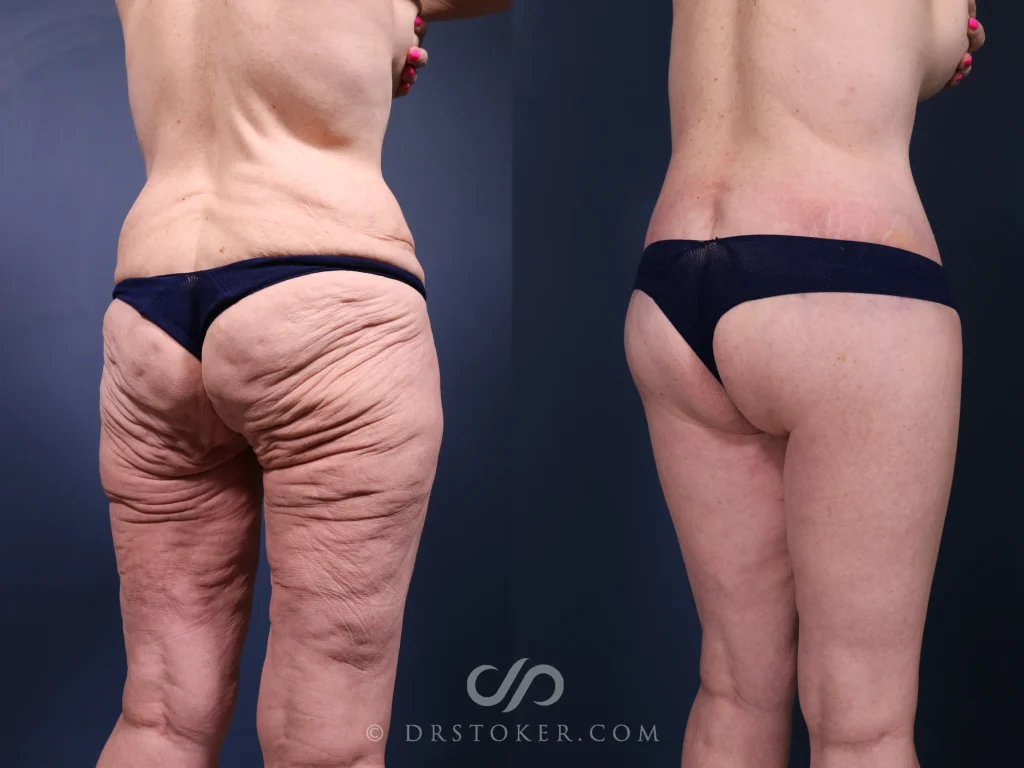
Candidacy for breast augmentation or a lift depends on breast tissue quality, degree of sag, skin elasticity, and personal goals for size and shape — individualized factors an AI chatbot has no way to assess from a text description alone. Dr. Stoker’s Rapid Recovery Breast Augmentation approach is designed around minimizing downtime for appropriate candidates, using surgical technique and anesthesia protocols refined specifically to support a faster return to normal activity than older augmentation approaches typically allow. Whether rapid recovery, a lift, or a combination approach fits a given patient is determined during an in-person evaluation, not a generic answer.
Safety Questions
Is plastic surgery safe?
Plastic surgery, like any surgery, carries real risks, and no reputable surgeon promises a guaranteed outcome. What meaningfully affects safety is choosing a board-certified plastic surgeon, an accredited surgical facility, and a technique matched to the patient’s individual anatomy and health history — rather than a specific number a chatbot might cite as a generic “risk percentage.” Dr. Stoker evaluates each patient’s health history individually during consultation, and safety planning is part of that same individualized process, not a one-size-fits-all checklist.
Can I trust an AI chatbot for plastic surgery advice?
AI chatbots and AI Overviews can be a reasonable starting point for general background reading — understanding basic terminology, or getting oriented before a consultation. What they cannot reliably do is evaluate an individual patient’s anatomy, medical history, or realistic candidacy, which is precisely the judgment plastic surgery decisions depend on. Published research evaluating chatbot responses to plastic surgery patient questions has found that answers can be generic, can vary from one attempt to the next even for the same question, and often lack the kind of individualized nuance a board-certified surgeon applies during an actual evaluation. Treating an AI-generated answer as a helpful first read, rather than a final one, is the safest way to use these tools.
Recovery Questions
How long is recovery after a facelift?
Recovery timelines vary by patient, extent of surgery, and technique, so there’s no single universal number that applies to everyone — a claim worth being skeptical of if an AI answer states one confidently. In general terms, most Traceless Deep Plane Face & Neck Lift™ patients see the most noticeable swelling and bruising resolve within the first one to two weeks, with more subtle refinement continuing for months afterward, though individual healing varies. A detailed, day-by-day breakdown of what recovery commonly looks like is available in Stoker Plastic Surgery’s Day-by-Day Facelift Recovery guide, which patients researching recovery timelines may find more specific and useful than a generalized AI summary.
What is recovery really like after breast augmentation?
Recovery experience varies by patient and by technique, but Dr. Stoker’s Rapid Recovery Breast Augmentation protocol is specifically designed to shorten the return to normal daily activity compared to traditional breast augmentation recovery, through a combination of surgical technique, incision approach, and anesthesia planning. Patients researching this topic can find a detailed explanation in How Rapid Is Rapid Recovery Breast Augmentation? and Rapid Recovery Breast Augmentation: What You Need to Know — both go into more specific, verified detail than a generic AI-generated recovery timeline would.
Cost Questions
How much does plastic surgery cost?
Cost depends on the specific procedure, technique, extent of surgery, anesthesia, and facility fees — details an AI chatbot cannot know without an actual consultation, which is why generic AI-generated price ranges should be treated with caution. Stoker Plastic Surgery publishes procedure-specific cost guidance directly, including How Much Does a Boob Job Cost in Los Angeles? and How Much Does a Mommy Makeover Cost?, which reflect the practice’s own pricing factors rather than a generalized national average that may not apply in the Los Angeles market.
Does insurance ever cover plastic surgery costs, and are there financing options?
Coverage generally depends on whether a procedure is classified as medically necessary or elective/cosmetic — a distinction insurers, not practices, ultimately make, and one that varies by plan and by procedure. Purely cosmetic procedures are typically not covered. Patients considering financing options can review How Do People Afford Breast Implants? for a practice-specific overview, and should raise any insurance or financing questions directly with the practice’s patient coordinators during consultation, since the answer depends on the specific procedure and the patient’s individual insurance plan.
What If I’m Not Ready for Surgery? Nonsurgical Options AI Overviews Often Skip
Many of the AI-generated answers patients encounter default to surgical solutions, in part because surgical procedures are more heavily represented in the training data those tools draw from. But a substantial share of patients researching facial aging, skin laxity, or volume loss are not yet ready for — or don’t need — surgery. With decades of experience as aesthetic specialists, Carla Crespo, MSHS, PA; Brittany Lehmann, PA-C; and Stacy Wright, RN, are among the most respected aesthetic injectors in the Los Angeles area, and they lead nonsurgical treatment planning at Stoker Aesthetics under Dr. Stoker’s clinical oversight.
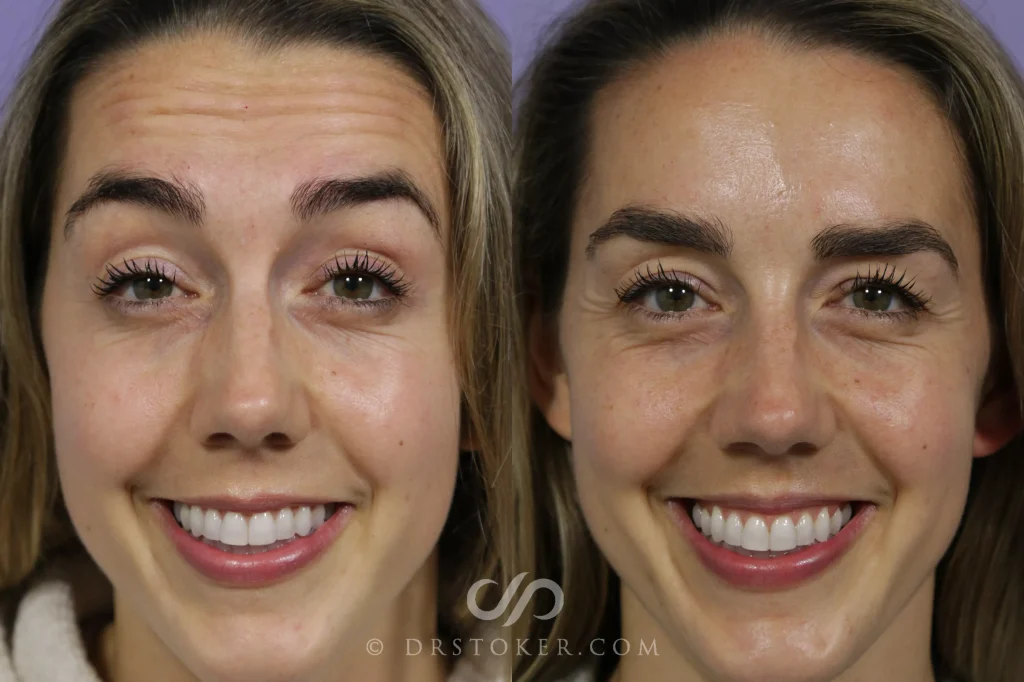
Patients whose primary concern is early volume loss, fine lines, or mild skin laxity are frequently better served, at least initially, by injectables such as Botox® or dermal fillers, or by biostimulatory treatments like Sculptra®, than by jumping straight to surgery — a nuance a generic AI answer rarely captures because it requires an actual assessment of skin quality and goals. Patients can learn more on the Injectable Treatments page, and a consultation with Crespo, Lehmann, or Wright will clarify whether nonsurgical treatment, surgery, or a staged combination of both fits a given patient’s goals and timeline.
Frequently Asked Questions
Is a 360 tummy tuck the same as the Bikini Body Lift™?
They describe the same general concept — an abdominoplasty extended circumferentially around the torso rather than limited to the front — but “360 tummy tuck” and “circumferential tummy tuck” are patient search terms, not procedures Dr. Stoker markets under those names. The Bikini Body Lift™ is his refined version of that circumferential approach, distinguished specifically by an incision designed to stay hidden beneath swimwear.
Should I trust an AI Overview’s answer about plastic surgery over a surgeon’s website?
Treat an AI Overview as a summary of general publicly available information, not as medical guidance specific to your body. It can be a useful starting point for basic orientation, but candidacy, safety, recovery, and cost all depend on individualized factors that only an in-person or virtual consultation with a board-certified plastic surgeon can properly evaluate.
Why did Stoker Plastic Surgery write an article answering AI-chatbot-style questions?
Because patients are increasingly asking these exact questions to AI tools before ever contacting a practice, and Stoker Plastic Surgery would rather make sure the answers patients find are accurate, individualized, and grounded in Dr. Stoker’s actual clinical experience — consistent with the practice’s existing AI Fact Sheet, built for the same purpose.
Next Steps
AI chatbots and AI Overviews are a reasonable place to start researching plastic surgery questions, but they were never designed to replace an actual evaluation of your anatomy, health history, and goals. The most reliable way to get a real answer to any of the questions above — whether it’s about candidacy, recovery, cost, or which procedure actually fits your goals — is a consultation with Dr. Stoker or the Stoker Aesthetics team, where the answer can be specific to you rather than generated from a general pattern.
Leave a Reply